An Interview with Tujiko Noriko

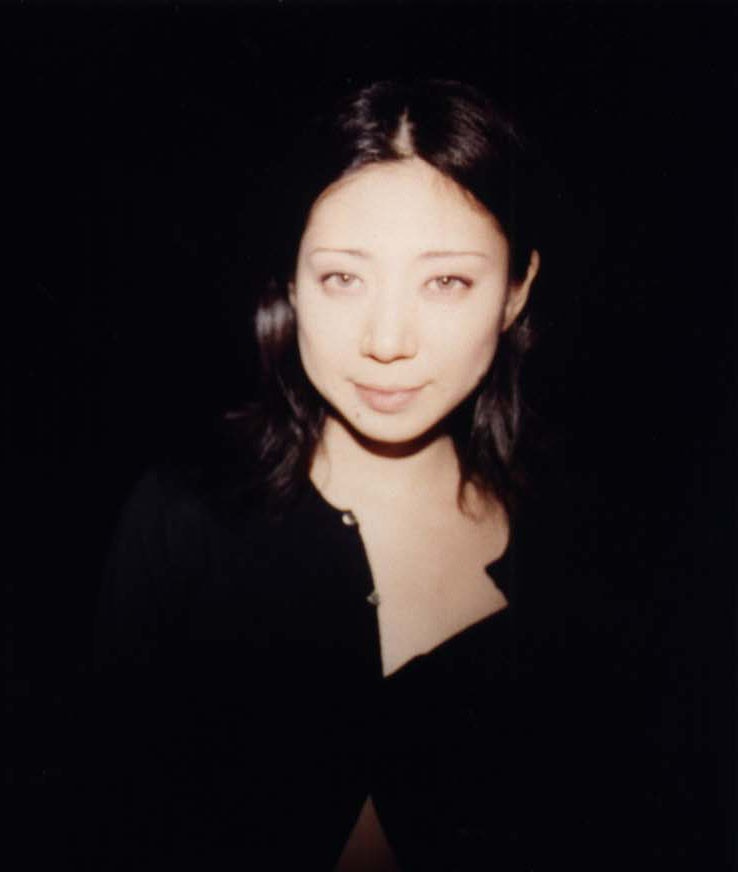
In the early ‘00s, back when dinosaurs roamed the earth, using the laptop as an instrument was still a novel concept, one that disgusted the purists and amused the onlookers. Much of the earliest laptop music was either harsh, textural experimental music or minimalistic techno and ambient, but one of the very people to channel these sounds into bright, colorful song-based music was a Paris-based Japanese artist named Tujiko Noriko. Since then, she’s released several albums over a wide range of styles, and while the rest of the music world has caught up to her (I can personally hear a lot of her influence in artists like more eaze and Ulla), she’s continued to chart her own path. After mostly focusing on film work in the mid-2010s - early-2020s, she came back in a big way with 2023’s double-disc Crépuscule I & II. She hasn’t slowed down since; last year she released Echoes on the Hem, one of the last releases on Longform Editions, and a truly heady collection of spaced-out exploratory tunes with Adrian Corker and George Barton under the name CxBxT. I spoke with her over Zoom last September, where we talked about her memories of the great Peter Rehberg, recording acapella in a hotel room, making an album dedicated to her late cat, and more.
Special thanks to Amelia for help transcribing.
Hi, can you hear me?
Yes.
Okay, great. Sorry to keep you waiting. Thanks for bearing with me with all the technical issues, I appreciate it. You’re calling from Paris, correct?
Yes, near Paris.
How long have you been living there?
Since 2002, so yeah, 23 years.
How did you end up in Paris again?
It was at the beginning, I thought to move to Berlin in Germany. Then I had a job doing music for a theatre piece in France, so I came to France and I stayed. At the beginning it was back and forth, I didn’t mean to stay here so long.
What kept you staying there?
Oh, just having a family and having children and you know. I will still have to stay here for a while and maybe I’ll go somewhere else.
Are there any other musicians based in Paris that you work with or interact with in your life? Or do you feel like you’re kind of on your own?
I’m on my own. When I arrived 20 years ago, I had some musician friends - some, not a lot. But they all moved to the countryside or to another country. No, I don’t have many musician friends. I know Stephen O’Malley and Kali Malone, they live in Paris and we keep saying ‘Let’s meet up next time!’ and then we never meet. This kind of thing.
I know Stephen worked with Peter Rehberg a lot, so I guess it makes sense that you would be connected. You made a couple of albums with Peter, which were really interesting to me because it feels like they sound different from everything else that you’ve made. I was wondering, did working with him kind of push you into different directions musically or sonically?
The work that I did with Peter was the theatre work that I mentioned. Otherwise, we never really collaborated. We did just a bit of music for the theatre. And then again, for the same company. Stephen joined a little bit, but yeah, it didn’t feel like personal work because it was for the dance piece. But, I had some influence already, like when I started to make music as an audience, when I listened to his music, I was like, ‘Wow, it’s so nice!’, you know? So yeah, more in this way than later working for the dance company.
I know that more recently you’ve been doing work for film, you co-directed a film and everything, so were you doing work in theatre before you were like getting involved in film?
Yes, it was just by chance. I didn’t understand really, like, because I had to go on the stage as well, so I had no idea what I was doing. I had just arrived at Paris. I didn’t have so much theatre experience. It was really quite exciting and surprising. I didn’t know so much about contemporary dance works. Later I got really interested in films. I never thought about it, if it had something to do with everything else, but maybe it’s separate. I liked film even before then.
What was it that made you start to get interested in film?
I liked films, like many people. And actually, I don’t know why exactly, but it’s like starting to make music a bit before 2000, it just became so easy for everyone to make music. I felt like it’s easy to make - I mean, of course, I don’t say it’s easy to make films - but like, there were video cameras, you can edit easily on your computer. And I felt it’s handy. When I make music, I always have some image motivation, or small stories, so I have something in my head. I like stories, I like images, and naturally, I thought “Maybe let’s buy a camera, it’s handy.” And then I tried. It’s not like my friends were doing it, but yeah, I just tried.
With your early film work, it was just you on your camera. With Kuro, which I haven’t had the chance to see yet, was that like a larger, serious film crew?
It was more serious than what I said to you. Because when I started to make film, it was really a long time ago, like 20 years ago. I just made that alone, very experimental. And with Kuro, it was a bit more concrete. But still, I’m not talented in looking for money or producers. So Joji and I wrote a kind of abstract story and we just asked friends, a producer who had some opportunities to use equipment and then some small staff like, you know, in a very cheap way. And, yeah, maybe we didn’t have much money to give people, but I don’t know. (Laughs) Some people were so kind to help this film. Joji [Koyama] told me something interesting. We are writing a film again. And every time, again, we have to find money. And then there it gets really slow and we don’t have producers. And then I start to say, yeah, but Joji, we can just make it very cheap. And, you know, we ask around people, but sometimes it’s not healthy. You know, people are nice. But after a while, it’s better to pay. So yeah, getting more and more serious trying to pay.
When you first started making music, were there any other artists who were making laptop music or whatever you want to call it in Japan at that time?
In Japan…yeah… like Ryoji Ikeda. He was making computer music quite early. And Ono Satoru… I forgot, but yeah, some people. There was computer noise, Merzbow, you know. Back then when I started, I didn’t know them so much. But after a while, when I did concerts, I started to meet them and then I got to know them, and, wow, it’s so nice.
Were there any artists who are making computer music that kind of made you think that like that was the thing that you could do or that you wanted to do? Or was it just something that you ended up trying on your own and it kind of stuck?
Yeah, I just tried on my own. Of course, I had a friend who had a synthesizer and then I bought the synthesizer from him. But again, I was trying things.
I read that you ended up releasing music on the Mego label because Peter Rehberg and Christian Fennesz had discovered one of your demos in like 2000 or something. Had you been aware of their work prior to them getting in touch?
Yes, yes, yes. This cassette tape I actually gave to Peter - it was my first songs. I started to make music and then I heard that there is a very small festival where Peter and some other French experimental musicians were coming to Tokyo, like a two or three day festival and I was like, yeah, I’ll go. And then I gave this cassette tape with my first songs that I ever made and I gave it to Peter and he liked it.
You’ve been prolific recently, but there was a period of about 10 years in between My Ghost Comes Back and Crépuscule I & II. Obviously a lot happened in that time period and Peter tragically passed away. Did his loss affect your music at all?
So the last album was all made before he passed away, but I remember when I sent him the demo. It was all quite finished, but I sent the music and was like “what do you think about it?” And he said, “yeah, I’ve been listening to it,” and then as it was quite long, he said let’s release it as a CD, just two days before he passed away. I was quite happy that he wrote to me. He had been listening to it and he liked it. So I felt like I’m just doing it with Peter, like releasing it.
I know I mentioned that there was kind of a gap between that release and the one before it, not counting some soundtrack work. What sorts of life changes did you experience in between those two albums?
Oh, well, yeah, just time passing. But also it was because the next album, my solo album, will be released in March next year. It’s very song-based and I’m singing along. Crépuscule I & II was just by chance. I was in that mood because for me it was quite a discovery. Making music for films opened up… like, I don’t know why I sang always. Why? I don’t need to sing! (Laughs) I thought I don’t really have to sing a lot, just a bit, because I made music for films and there is already a narrative, so I don’t need to add a narrative part. It’s kind of freeing and it’s nice. So I tried in this direction a little more. Maybe I will do that again. But yeah, it was this moment and just to change a little bit.
So you’re saying you don’t really understand why you were singing so much on these earlier albums?
Yeah! (Laughs) I can’t stop singing, maybe. But then sometimes it’s like, “no, Noriko, you don’t have to sing all the time, you know. Give some air to the audience.”
For sure. I mean, I think you have a very lovely voice. Do you think of yourself as a musician first and a singer second? Or has it always been part of it for you?
I never thought that I’m a singer. I don’t dare to say that I’m a singer. No, I make music.
Yeah, that makes sense. So you have a new album coming out next year, like early next year?
Yes.
When were you working on this music? When did you record it?
This is the first time that I have an album with such a long time span, really. The oldest one is… so in this track, my daughter is singing just a bit. And I think she was like, oh, how old was she? (Laughs) I think she was like 3 or 4 or 7. I don’t remember, but now she’s 19.
So this is an album of recordings dating back like 16 years ago or?
Yes, the oldest one, and the newest one is kind of recent, so it has a mixture. Most of the songs are dedicated to my cat who was deaf. And then I thought it’s interesting to make music for the deaf cat. Unfortunately, he passed away because he was so relaxed under the car and he can’t hear, you know, and the car was parked not on the concrete, it was on the grass and, you know, a bit soft, I imagine. And he didn’t feel the car moving above him and he was dead.
Oh no, that’s terrible.
Yeah it’s really terrible. And it was my friend who was driving. I really loved this cat. Because he was deaf, I was really overprotective, like an overprotective mother, like, you know. I was so sad to lose him. And then I started to make music for the cat. So, it’s a long span, but it has a very concrete direction. Most of the songs are made for the cat.
That’s really moving. When I was growing up I had two cats and I had a very close bond with them, so I always love any music that’s inspired by cats. I’m looking forward to hearing that.
Yes.
But talking about how you’re putting together this new album, I guess I was wondering what your process is for putting your music together. I feel like your music has these different sonic elements that should seemingly clash, but it flows together well. With your music do you usually start from a very specific place and then build on it? Or is it different with each piece of music?
The next one, a collaboration with two musicians, is going to be released in October. So these two, it has very different motivation and different vibes in it, so I’m interested in how it’s going to be. Maybe we will do some concerts. And yeah, because we recorded it so quickly, this album. I’m really curious. I feel like it will grow a bit more. We made it so fast and we don’t know how it’s going to be.
I really enjoyed that album. When you got in the studio with those people, did you know you were going to be making an album or were you just kind of working on music and seeing what happens?
Yeah, it was more like we’ll see what happens. But it was more at the beginning with Adrian. We recorded in two days, I think. And then George joined after that. But during those two days we recorded in quite an organized way, so it was all finished, kind of. Then George made it nicer. But yeah, I think we were not like, ‘Let’s make an album,’ we were more like ‘Let’s see how it will be.’ It was fun.
Yeah, that makes sense. I was wondering, what role does editing and piecing things together, either in the studio or on your computer, what role does that have in shaping your music?
A lot of editing. But I love recording, it’s the most fun moment. Really, I love recording, but I’m not a good musician. So I really appreciate how we did with Adrian and George, because we didn’t do any editing, really. Even if we are not great musicians, except George, he’s a really great musician. He can’t make a lot of mistakes. So he’s maybe helping us. And so normally when I make music, the important part is editing because I love recording, but I don’t play very well so I have to kind of embellish. I have to tidy. But a lot of things go intuitively as well. So it’s a big motto of my music. But yeah, unfortunately, I can’t put my intuitivity in a very trained way, so it’s kind of messy, and there’s a lot of editing.
When you’re working on music, is there anything that’s really guiding you in terms of experimenting with different things or trying different things, or is it more of an improvisation?
No, it’s not improvisation, really. It depends. But improvisation gets even more messy. It’s fun, but I prefer to have some kind of idea already, otherwise it’s getting everywhere. So I have some image, like let’s make this kind of music or when there are songs, lyrics or theme or some limit that I would make, like the next album that I made a limit, like, okay, I’m going to make songs, like song albums, but mostly only with drums. So this is fun too. Every time I have an idea and then I want to follow this concept or narrative.
Who usually plays the drums on your records?
I never had drummers on my albums - well, maybe sometimes like making a beat on a computer. But the next album, I already recorded most of them. I have two drummers, my friends, and one of them unfortunately passed away just some months ago. And I didn’t finish this album, and I have to really finish it, and his family can listen to that. But yeah, he’s just my friend who did the drums, really cool drums. And then I’m singing on it.
Your music feels like such a product of your own voice. So I’m really curious as to how you approach collaborating with other people. Like when you’re working with other musicians, do you go into it with a different mindset than you do when you’re working on something on your own?
Not so different, but I feel more relaxed. I like collaborations because I can be more surprised by… you know, if I’m alone, I’m just often doing the same thing, or there is not so much surprise. I can control it very well, but I like to work with somebody else and I feel more free sometimes and less responsible. But the mindset, I don’t see so much difference. I like both, but collaboration feels more free.
Yeah. I’d imagine it’s a feeling of like, you can kind of give up a degree of control.
Yes, it’s such a nice feeling.
Going off of that, one of my favorite albums of yours is your collaboration with John Chandler and Lawrence English, U.
Ah! Yeah!
I really loved that album. How did that collaboration come together? T
Mmm yeah, it’s fun! We are making another album.
Really?!
Yeah, and it sounds great! It sounds really good, but just, I have so many projects and I’m so slow to pick, but we recorded it at the end of January.
So initially it started from Lawrence. Before U, there was an album called Blurred in My Mirror. It was presented as a solo album, but actually it’s a collaboration with Lawrence, I would say. Lawrence, when I went to Australia I met him for the first time. He was a young boy. I was young too, but he was like really… I still remember how he was… a really young boy (laughs). Really pure and enthusiastic. He wanted to record me acapella. He came to my hotel room - not suddenly, maybe we made an appointment, but it was maybe in the morning. I don’t remember. I was never ready, but I know he wanted to record my acapella, so I will sing. Oh my God! (Laughs) So I started to sing in a hotel room, just like this (laughs). And I didn’t feel shy. Maybe I was drunk or I don’t know why. I just sang and he recorded, and then he shaped music out of it, out of my acapella!
Wow!
Yeah, it’s crazy! I think it was that. I feel sorry, like, I don’t know how my singing sounded, but yeah, he made it nice.
Is that the only time you’ve ever done something like that, where you record something acapella and then build something off of it?
Yeah!
That’s crazy.
Yeah, it is crazy! Lawrence, he had a good idea, but I mean, yeah, I have to talk about it with him. Like, I don’t know what he thought about. He just comes with a recorder and then I sing. Well, now we are very good friends and John joined us - Lawrence is a good friend of John - so we started, we started to do things together after that.
What made you want to come back and make another album with those people?
After U we always said, yeah, let’s do something again. And we’d make a beat and then we don’t meet for three years and then we make a beat again. So we said, okay, let’s finally meet up and then let’s record. But we always wanted to make something again, it’s just that we are very far [from] each other and busy with something else.
Is it a continuation of the sound you’re working with on the previous album or is it going to be something entirely new and different? It’s okay if you don’t have an answer to that question.
... I think it’s different. I have to listen to U again because I’m forgetting, but of course it sounds different I think.
Yeah I mean, I’d imagine you’re all very different now.
Yeah yeah yeah. We are all different now. I feel like John changed a lot. And Lawrence too. And me too! (laughs)
So it seems like you’ve been very prolific recently, and I know it seemed like there was kind of a period where you weren’t releasing as much music. Was that a conscious thing where you wanted to start working on a lot more music, or was it a thing where you’re just always working on music and it just wasn’t really getting released as much for a period of time, or something else?
I think I’ve been making music always, but, you know, with life, it’s just… naturally I had babies and I’m just busy, that kind of stuff. But I didn’t really plan things. Again, because I’m busy with family and I’m not organized, so I start many things, then it takes such a long time to finish. I think things are getting finished, but yeah, I start too many things.
I can imagine. I know you mentioned your daughter’s like 19 now, so I’m guessing your kids are getting older at this point. Is that kind of giving you more time to work on music and stuff or?
True, yeah. Well my youngest one is still 8, but he’s a big boy. I’m really looking forward to that day when they fly away and I live only with cats (Laughs).
I feel like with a lot of your more recent work, it’s been sort of more ambient and less glitchy and noisy.
Mmm-hmmm.
Has that been like a conscious move on your part? Or is it just how the music has been naturally evolving?
Hmmm….Yeah, it’s a mystery. I don’t know why. It’s a good question, but then, you know, it’s just, yeah. I wouldn’t make that music always, either. It was the moment, I think.
I feel like what you were doing when you started out 20-something years ago was very different and original, and today I hear a lot of its influence in what younger musicians are doing in contemporary, experimental electronic type music. So I guess I was wondering, have you noticed younger listeners paying more attention to your work now than they did 10 or 20 years ago?
Ummm, yes, I hear that. But I don’t do so much Instagram and so on, but Joji is very kind to tell me, so I hear that. (Laughs) And if it’s true, I find it interesting and I appreciate it to feel connected with the younger generation who is making music now. Yeah.
Sorry - who did you say was telling you that?
Joji who is playing with me tomorrow. He made the film Kuro with me and also he’s my good friend. He did a lot of the covers for my albums. There is an old album called 28, it’s going to be re-released and the cover is made by Joji. We collaborate a lot. He likes music, so he knows a lot of young musicians as well. And he told me, “yeah, Noriko, a lot of young people talk about your music” and I’m like, yeah, okay, cool. (laughs)
I guess I have a couple more questions. You sing in both Japanese and English. I was wondering, how do you determine which lyrics you sing in Japanese versus which ones you sing in English?
... but I don’t sing in English often, do I? It’s really only some tracks. For me it’s much, much easier to make lyrics in Japanese, of course. When I worked with Lawrence, I preferred to try my broken English to do my acapella. I don’t know what I thought (Laughs). It’s a way of communicating with Lawrence. Also in Japanese, sometimes it’s difficult to sing. It can be nice, but sometimes it has its limitations. So I asked Joji to translate some Japanese into English, and then I sang some English songs for the next album, something like that. But yeah, it’s a way of communicating as well. Sometimes I like that no one understands what I’m singing in concerts, and sometimes I want to be understood when I’m singing, like for Lawrence, but maybe more on a personal level.
My last question is - I read something once where you described your music simply as pop music. And I was wondering, what does pop music mean to you? Because I feel like it means something different to a lot of different people.
It can change, but yeah. My mother, she kind of gets sleepy when she listens to my music. My children, they are still okay. But when it’s pop, it’s more…uh… you know, it’s pop. (Laughs) Like, it’s less difficult. And then often there are songs… more communicating, or even in films, there are a lot of pop films and really un-pop films. Something that can make people quite, in a way, passive. But yeah, I try to be pop in a good way.
That’s all the questions I have. But I really appreciate you taking the time to talk to me. I’ve enjoyed all the new music you’ve been putting out recently and I’m really looking forward to hearing these new albums you’ve mentioned coming out in the future.
Thank you.
Before I end the interview, is there anything you wanted to talk about that I haven’t touched upon yet or brought up?
No, nothing, but just I wonder if you live with cats (laughs).
No, I wish I did! My roommate has a dog. I’m 26 and I’m not really at a point where I feel responsible enough to be taking care of a pet on my own, but I want to live with cats at some point.
Okay! (laughs)
What was your cat’s name? If you don’t mind me asking.
Pon-pon. So the album is called Pon.
Awww.
It’s a very typical cat’s name in Japan. (calling) Pon-pon! Pon-pon!
That’s very sweet. Thank you so much for talking with me.
Have a good day. Thank you.