An Interview with more eaze

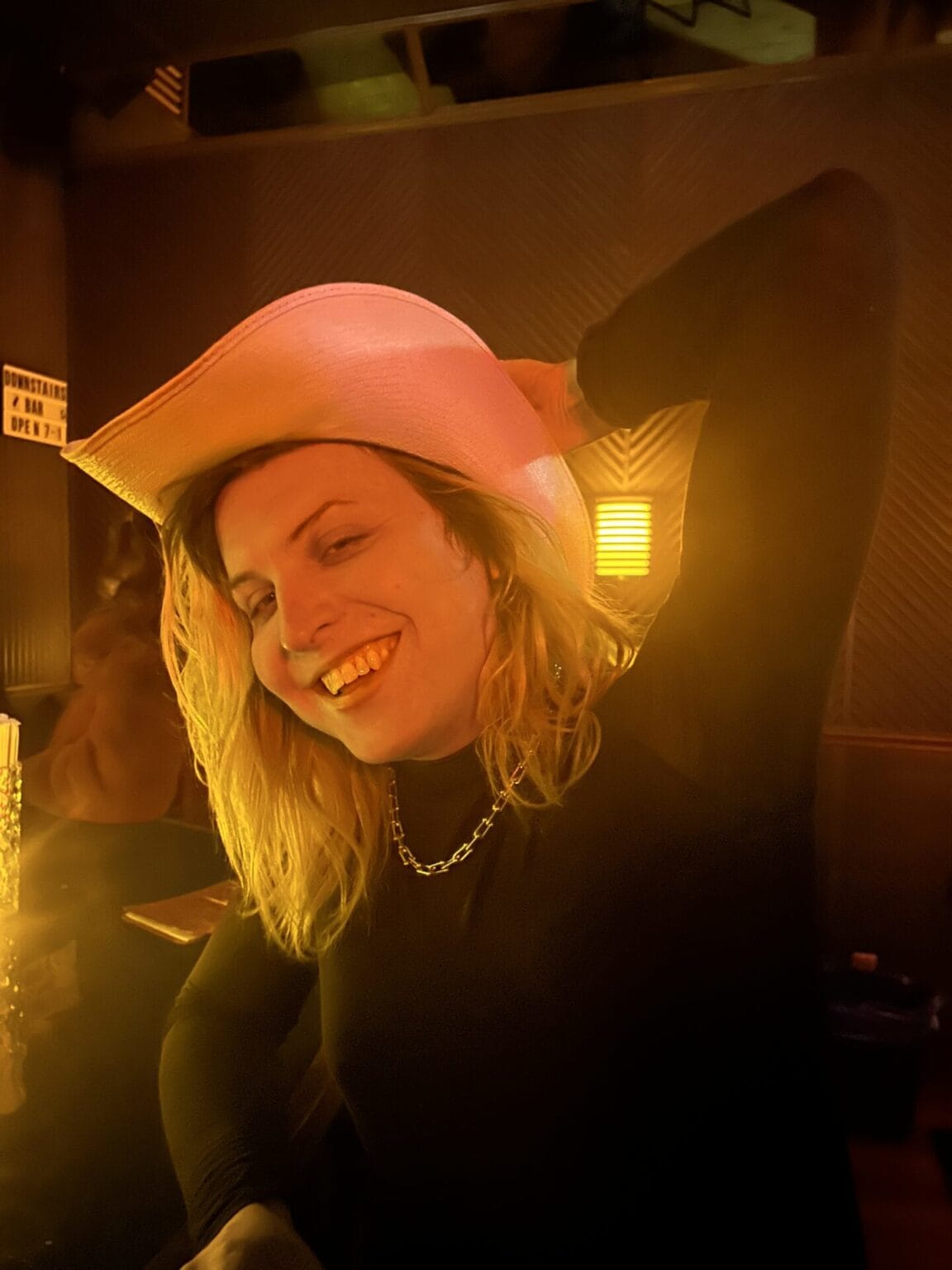
Mari Maurice Rubio, a.k.a. more eaze, is an NYC-based multi-instrumentalist originally hailing from San Antonio, Texas. Over the past ten years, she’s emerged as one of the most fearless and singular voices in ambient music, experimental music, whatever you want to call it. I first learned about her work in 2020 through her collaborations with claire rousay, and I feel like her work has been kind of pegged by some people as part of some “emo ambient” trend that, in my view, totally overlooks her unique pedigree as an experimental composer. As cliche as it is to say “x musician defies genre and can’t be put in a box”… well, what more can you say here. It’s true.
We’d been in touch over the internet for a bit now, and I could sense she had a similar kind of obsessiveness about listening to music as I do. I think I was right! We talked earlier this year as a major snowstorm gripped NYC, in what has to be one of the longest interviews I have yet to do. We talked about everything from her background in country music and americana, her time studying with Michael Pisaro and Wadada Leo Smith, and her three [!] new projects this year: a new solo album called sentence structure in the country, her work as a producer on her creative and romantic partner (and former interview victim) Wendy Eisenberg’s self-titled breakthrough album, and her work with Florian T M Zeisig’s new project The Thinking of the World Began Pounding in Our Ears the Moment We Hit Shore. And also a whole lot of other stuff too.
She’ll be playing with Wendy tonight at Chicago’s storied Empty Bottle venue, and you really ought to be there.
How was your DJ set at The Lot yesterday?
It was great! It was really fun. It was with Pink Must, so Lynn [Avery] and I. We were almost fools for doing it because of the blizzard, but it started like right as we were DJing, and with The Lot you can kind of see everything happen. So the second we were done, they were like, “hey, the next person isn’t showing up. Do you want to keep going?” And we’re like, “we gotta get out of here! This is looking pretty rough right now!” [laughs] And we don’t really live anywhere close to Williamsburg. So it was kind of a mad dash to get back to Crown Heights and bunker down for this fucking crazy storm.
My friend’s fiancee had her bachelorette party this weekend and so she and a few of my other friends flew out to NYC for the weekend, and now they’re all stranded there.
Yeah, it’s nuts. I’ve never seen it like this. I mean, I think it’s the worst snowstorm in, I guess like 10 years. Like, 2016 was the last time there was a blizzard. So it’s pretty rough.
I’m glad you’re hanging on!
I feel like whenever I talk to the musicians in Chicago, they tell me that the winter is when they usually hunker down and get like shit done. So I hope at least something comes out of it.
I feel like recently there’s been a lot of artists, people who have been around for a while, who are hitting this insane sort of creative stride. I’m thinking of people like Pat Thomas, the Crampton siblings, Jim O’Rourke and Eiko Ishibashi, etc. But I feel like with you and Wendy, it’s a similar thing where I’m witnessing so much great music from both of you, together and separately. It feels like there’s all this creative energy flowing through your work right now that feels contagious to me as a listener.
That’s very sweet! And it’s like, with the Crampton siblings, I don’t know them personally but I’m a huge fan. And I feel like we’ve probably both been in the scene and working for roughly about the same period of time. I feel like around the time I started doing more eaze was when American Drift came out, and that was a hugely impactful record for me. Just a total game changer right there, changed a lot of things of how I thought about music. I love that album.
Your new album is called sentence structure in the country, which brings to mind your background in country and americana and things like that. I was wondering how that background has informed your work, particularly on this most recent album.
I mean, it’s interesting because I was a lot closer to that stuff when I was living in Texas. But I don’t think it really became something that I was a lot more conscious of until moving to New York, really. And I think having the distance away from it really made me realize how much it had impacted just the way I play, like especially the way I play violin. There’s so much fiddle technique just kind of baked into anything I do on that instrument. And then obviously, pedal steel just idiomatically makes it kind of hard not to sound like you’re playing country music.
Let me phrase this… Every time I move away from Texas, I feel like my relationship to that background and that kind of music usually becomes stronger, because I feel like the last time it was really strong for me in my life was a very long time ago, which was when I was living in Los Angeles. And I think I had really missed performing with singer-songwriters, just kind of jamming with a lot more americana type artists, because that was a big part of my childhood. When I was in high school, I wrote my own particularly shitty singer-songwriter material and played it [laughs]. And then I would play fiddle with a lot of, like, older guys in their bands and just be sort of sitting in, and I would play guitar and mandolin sometimes too. But I feel like fiddle was really the thing that sort of overtook everything else.
And yeah, it’s interesting, because I feel like sometimes, living in Texas, I was too close in proximity to it to fully appreciate it. Doing that at a young age, I feel like I kind of got a reputation, but I always had much loftier and more wild interests than that. And so there was a little part of me, especially in my 20s, where I was like, “I kind of want to shake this off.” And then I moved away, and when I moved away, I was like, “Oh, I really want to be back in this world.” And then I got back in that world, and I was like, “actually, I need to shake this off again.” Like, it’s too much. I’m too close to it [laughs]. But I think being in New York, and playing with the group of people I’ve been playing with, it’s forced me to have a much more well rounded relationship to that music, and the role it plays in my own work and sort of the vernacular with which I play, because I think that there are a lot of things in terms of influence and in terms of background that are just hard to escape sometimes as a musician or as a player. It’s sort of the same thing with Wendy, like Wendy really has so much jazz vernacular in their vocabulary, that it just sort of seeps into how they write songs and how they approach a lot of other things. And I think for me, that is very true with playing folk music growing up and being really inundated in that world. It’s been great in New York, because I think there’s weirdly a lot more kind of cross pollination between these things than I predicted there would be. I feel like part of the problem in Texas is a lot of these scenes are kind of striated and very much separate. Being here, it’s not uncommon to play with a folk musician who is deeply interested in the avant-garde world. And of course, you know, that’s kind of where I shine, when both of those things are touched upon.
And so I think that that’s been a really big part of it. And then also, being with Wendy, Wendy was really sort of getting into a lot of this music in a very intense way when we first started dating. And it was like, I heard Gillian Welch all the time growing up, and it really reaffirmed my love of that and a lot of other music where I was just like “oh yeah, I don’t ever really think about putting this on or necessarily actively listening to it, because it was something that was so much a part of my life as a teenager and throughout my early 20s.” And so it’s been really great to kind of reconnect with that, and feel like it’s actually fully integrated in my playing and how I think about writing now, in a way that I don’t think was particularly there, or wasn’t really allowed to be there in the same way when I was living in Texas for a long time.
You mentioned that it’s hard to escape the signifiers of that kind of background when playing the pedal steel. I feel like the only pedal steel player who I could argue kind of broke out of that dynamic was Susan Alcorn.
Oh, of course.
Like, you can listen to her music and not even realize she’s playing pedal steel.
Totally, and it’s amazing. Because so much of that for her really just comes with her mastery of technique with it too. And I think also, she had a really hyper custom design steel that was capable… oh, there’s Wendy in the background.
Hi!
But I think a big part of it is she had a pretty hyper custom design steel, from my understanding, in terms of the tuning and the pedal setup. Someone’s explained the tuning to me, but it’s a real kind of hodgepodge of, like, c six and e nine together. And then the pedals are doing some crazy things. I think she had 13 strings if I remember correctly, which is a lot. And like, my pedal steel has eight, so there’s only so many options I’ve got in terms of what everything does, and it only has four pedals. But yeah, Susan, I think just through sheer innovation with that instrument, really took it to a lot of different places. She had a lot of mastery of extended technique, too. But all the times I saw her play were really stellar and stunning because I was just like, man, you’re just doing this [laughs]. And it’s just because you’re so good, and because you can get this harmonic language involved in the instrument that completely takes it out of any notions of country music.
I feel like that speaks to something present in most of my favorite artists, where it feels like their individual personalities are inseparable from their work. Derek Bailey and Jim O’Rourke both feel like examples of that. It reminds me of a quote I read from Lawrence “Butch” Morris about how when you improvise, you can’t be a bullshitter.
I mean, I think that’s totally true. That’s what I’m always looking for in improvisation and with other musicians I play with in general. I mean, Jim O’Rourke is obviously like a huge influence of mine and, for me, as it is for many people, I think he was a big gateway for me into a lot of that world.
It’s so funny you say this, I remember writing my admissions essay for Mills years ago, and Fred Frith was on the faculty, and I talked about this very same thing, with Fred Frith and with Jim O’Rourke. I mentioned them both in this essay. And I was like “I want to be the kind of composer and improviser where you know it’s me when I’m playing, like it has a distinctive quality and it has a distinctive sound. That’s always what I’m looking for, especially with arrangers. Whenever I find an arranger I really like, I go kind of ridiculously deep on their discography, because I’m just like, I need to know exactly what this guy’s doing, and I wanna hear that in the context of a bunch of different work. Like Michael Gibbs, for example, is someone I’ve gotten really into recently, and it’s so wild to hear the difference between like how he’s orchestrating music for Gary Burton versus, like, the first Bill Fay record, which I still think is the best one.
He did the arrangements on that?
Yeah, he did. Let me double check, but I’m pretty sure.
I’m a huge fan of that era of British jazz, especially in terms of its arrangements. I don’t know what was in the air, but there was such a concentration of great large ensemble jazz music.
Also, just to confirm, he is the arranger on that record. I was like “oh boy, I hope I’m not getting this wrong” but I mean, it really sounds like him. The arrangements on that record are truly fucking stellar.
But with your music I feel like I’m not usually pinpointing these different elements of how your background informs your music. I’m trying to phrase this as a question…
[laughs]
… But I guess I was wondering what it means to have those elements present in your music, but not like in a super overt way?
Oh, sure. I mean, for my own music, I’m never really thinking too much about what it’s going to sound like. I feel like a lot of the time that usually takes more shape as I’m continuing to work on it. Like, I have a lot of friends and artists who I like who make these detailed influences playlists for their records, and I think that’s super cool, but that’s just not really my relationship to listening to music. It’s like, I’ll listen to things and I’ll be like “oh, I love this, and I really wanna take this in and understand it as completely as I possibly can,” and then figure out what that means for how I’m putting that into my own music. I think that’s kind of what the process is for really all the music I make as more eaze. Like, if I’m inundating myself in the work of Michael Gibbs or Gary McFarland or something, how does that come out if I’m producing an album of, like, glitch material? How does that transfer take place? And how do I keep this grain of this thing about my background and myself intact while expressing something completely different? I think that’s always the sort of question I’m interested in, and seeing what form that takes, oftentimes by implementing things that are a little bit designed for self sabotage [laughs], like having a pretty specific set of rules of how I might write something. Definitely on sentence structure in the country, there are like three tracks that are kind of all made up of the leitmotif of this pretty thorny chromatic chord progression. And just being like, “Okay [laughs] well, how does this still retain these qualities, even though it’s all based off of these three chords that are moving and kind of sliding in and out of tonality.
So, I think there’s most certainly a big part of that kind of influence with country and folk music, just in the instruments that I happen to play, and my background in those instruments. Like, for a while, I think there was a part of me that really wanted to try and work against that, and either make music that was heavily processing those instruments, or potentially just kind of disregard them, trying to that kind of grain of my background or my influences in whatever I was working with. But I think that as I’ve gotten older and become more comfortable with recording and with production, a lot of what I wind up doing is actually trying to see how those things also play against each other too. The title track of sentence structure in the country, for example, was initially just an electronic piece, but then I started playing with it live, and I started playing fiddle on it, just pretty naturally. It’s actually pretty funny, this all kind of started just because I accidentally left my pedal board at home for a show, and I was like “fuck, I can’t go back and get it.” [laughs] So when I realized this, I just decided to do the set without it, because initially, I wasn’t using a ton of pedals. But I was like, ok, I’ll just have some loops and things that stitch things together and treat the violin as a texture, and I was forced to play this show where I just had like, a couple of samplers, and the violin was totally dry. And I was like, this is actually amazing, because it made me actually play more like I play when I’m improvising. And it was like, super raw.
There’s a song on the new album, “The Producer,” where you aren’t using any autotune. Do you see that as a similar thing of wanting to try not processing an instrument?
Oh yeah, totally. I mean, I think using autotune on my voice is very much just treating the voice like another instrument. I’ve always been really in love with the juxtaposition of autotune and the instruments I play. It’s honestly hilarious to me, because the two instruments I play the most, which are pedal steel and violin, don’t have fixed pitch [laughs], and then to sing on top of that with a thing that’s hard-gating my voice into a specific key is very entertaining to me, at least. This weird thing starts to happen where it just becomes this other instrument that’s playing with the idea of intonation and tonality.
But I think I’ve been more interested in using my voice just without autotune. Pretty much every new Pink Must song that’s been done is autotune free. There’s also some more chamber-minded music I’ve been working with the intention of there not being any autotune on the voice. I think that was also a sort of reckoning with past and history that I’m always concerned with in my music. That was a big reason for doing that on this record, because it’s so much about thinking about how all of these influences and history sort of permeates throughout art and life. So it was like, “well, I used to never sing in autotune, let’s go back to that for a second.” And on that song in particular, there’s a kind of looseness to it. Even though there is this sort of fixed grid drum machine thing happening, it’s like nothing else is really stuck to it, and everything is sort of floating. So it just made the most sense to track it without autotune. There’s not a whole lot of autotune on the song “Biters” either. The autotune that is there is being run through a max path, that’s kind of like the bed of the song, and then the few vocals that are actually maybe intelligible on that are basically just me shouting in this very same small studio room.
Maybe it’s just me but the vocals on “The Producer” kind of reminded me of Peter Ivers a little bit.
Oh, thanks! I love Peter Ivers.
I do too.
Yeah, it’s actually very funny. Pink Must just went on tour in Europe, and we were performing a bunch of new material that we hadn’t really tested live before. And I really thought I was just ripping off Sam Prekop on some of the new songs we have, until a video was posted and my friend was like “dude, this sounds like Loose Fur, you sound like Jeff Tweedy.” And I was like “that’s also ok with me!” [laughs] Like, I love those Loose Fur records. But also, you can probably tell I have some chronic sinus problems, so I think I always have a little bit of the Jeff Tweedy frequencies in my singing.
To each their own!
Yeah [laughs].
But I was wondering - I don’t know how long you’ve been using autotune - when you first started using it, was there anything specific that changed how you thought of it as an instrument or as a technique? I guess I’m just wondering how it became a part of your music.
Oh, that’s a great question. I mean, I’ve been doing it since the beginning of more eaze, which was, like, 10 years ago. I think I started off as a little bit of a way to deal with dysphoria, because it was a way of transforming my voice and making it sound more like what I wanted it to sound like. Especially at the time, before I had transitioned or anything, I think that was a big part of it for me, in terms of being like “ok, I can hide behind this and kind of get outside of myself in this way by using this instrument.”
And then as I started to do it more and more on recordings, and then in live performance, too, I got pretty obsessed with the idea of treating it as its own instrument and its own aesthetic thing. I did a lot of improvised sets with more traditional free improv players in Austin when I lived there, where my setup was literally just like auto tune pedal run into modular synth. I feel like it pushed other people to make a lot of decisions that were sort of outside of what you would normally do in free improv, which was very fun, and I feel like at that time in Texas there were maybe some more conservative notions about doing those kinds of things in that setting, so to be able to bring in this element that just felt so outside of that vernacular was pretty powerful. Also, in doing that processing and going even further past just pitch correction, it really felt like treating it as its own instrument.
Some of the earliest Claire and I were working on, the original idea was that it was going to be all autotune and percussion, and that was it. Claire wasn’t doing any autotune vocals at the time, so it was just going to be her doing tabletop percussion and me doing the processed autotune thing, but we realized pretty quickly that we needed to make it a little more special than that. But that album I actually still really want to make with Claire, we’ve talked about it a few times.
But yeah, it was both a really personal decision that was wrapped up in a lot of gender stuff, and then as I got more comfortable using it, it became this thing where it was just my aesthetic choice and my instrument, in a way. It feels really good now to be in a place where that doesn’t have to be one of the only hallmarks of what I do as more eaze, because I think it was for a really long time. It’s still involved, but in a much more reduced capacity, it’s not the focal point it once was.
That first album you made together, that was If I Don’t Let Myself Be Happy Now Then When?, right?
Yep, that was the first one. We had one stray piece that was on a Full Spectrum compilation before then, which was really good, so that was the only other thing we’d recorded as a true duo. She played some drums on the very first more eaze tape, which I haven’t listened to since it came out and might be really embarrassing [laughs]. But her playing on it is great, I do remember that.
Well, I wanted to talk about that album because it was actually my introduction to your work. 2020 was when I really got obsessed with experimental music and stuff like that, but at that time it would have still been a new thing for me, so I hadn’t really heard anything like that before.
Oh, wow!
But obviously, I can’t speak to what the trans experience is, but as someone who is friends with a lot of trans people and also interacts with a lot of art, it feels like it speaks to some elements of that experience that most art really doesn’t, which is interesting to me.
It’s interesting because Claire and I both began transitioning within maybe a year or so of each other? And she had recorded a lot of this music initially, I think with the intention of making more of a solo record, but it was about her experience with that. Then when we started working on it, I was kind of going through the same thing but at a different time. It was very serendipitous. I think we were both really wanting to make something that confronted both the ugly parts of the process and the beautiful parts, and having this juxtaposition of things that were much more abstract and thorny, and more difficult to listen to, with these moments of blissed out beauty. We wanted those moments to be something like pop music, like a sort of moment of transcendence before it all gets swept away again. It was really interesting to work on it, because I do feel like she recorded a lot of her parts at a time where she was going through the same thing I was going through when I recorded it six months later or so. I mean, she was a really great companion for me throughout that whole time. It still is, I think, definitely some of the more raw and vulnerable shit we’ve ever done [laughs], which I think was a little bit of a reaction to attitudes we were both coming up against in that free music side of things, of things being very serious and almost academic feeling. Both of us were really into a lot of free improv and musique concréte, but we were also listening to stuff like the Crampton siblings, Giant Claw, a lot of stuff that was really very bright and colorful but very fucked up sounding. I think a big influence was trying to bring the vernacular of that world a little bit more into the free improv world, and vice versa, and make these connections that were kind of being ignored by people in our immediate orbit at the time.
I feel like most media or art involving trans people is either entirely focused on the transcendence or the ugliness of it all.
Totally. It can be very frustrating as a trans person, especially when some of the only representation you have is like “oh, isn’t it so great?” and you’re like, yes, but sometimes the process of this - especially living in America right now, being trans - fucking sucks! [laughs] There’s a lot of bullshit you have to deal with, in terms of things like bureaucratic red tape, and just going through all these different organizations and processes to even get a prescription for HRT in some states. So I think we just wanted to make something that was honest to that experience. Especially since we were both in early stages with this, I think we were particularly conscious of all the annoyances that you have to go through. And then there’s also a period of time when you’re on HRT, and maybe you’re out or you’re kind of half out and, like, nobody knows what to do with you [laughs]. Like, I had a really shitty office job at the time, and I finally felt like I was forced to come out because I was just like “how are you guys not getting this!” [laughs] Like, everything I’m doing screams girl, please just fucking call me the right thing. But that’s within the first year or so of transitioning medically and socially, and it can be such a headache. So I think that record was really about how this is beautiful and worth it, but also it’s really hard [laughs], and it really sucks, and there’s a lot of things in the way that you have to deal with. So for me, that album really sounds like these kinds of moments of really bright, beautiful things bursting out of this kind of sense of chaos of just rolling around and dealing with all of the bullshit that comes recently.
I definitely think those kinds of moments on the album are what really stuck out to me at the time. I’ve been thinking about it a lot recently because I’ve been listening to a lot of Luc Ferrari.
Oh yeah, he’s amazing.
And it’s very much that vibe of listening to the most menial sounds and all of a sudden it just explodes.
You probably know this, but do you know that one album on Blue Chopsticks that’s like these kind of weird chamber pieces he wrote? That’s one of my favorite things ever.
I’m not sure!
I’m trying to find it. I think it’s called Tautologies? It’s well worth checking out, because it’s using a lot more organic and acoustic instruments, but making it sound like musique concréte, but not necessarily in an extended technique way, just in how the instruments are treated and when they’re used in the piece. But I would definitely say that record was a big influence on If I Don’t Let Myself Be Happy Now, and a lot of my production work. It’s so good, I have to find it… ok it’s Interrupteur / Tautologos III.
Oh yeah! I fucking love that one.
That’s the one I’m thinking of, where there’s a lot of organ and electric guitar on it, and they move in such a bizarre way that you could only compose music like it if you have a background in musique concréte.
But going back to that album, considering how distinct it is from all of these common narratives surrounding trans people, I’m really grateful it exists.
One of the things that has been pretty amazing and lasting about that record is the amount of people who will talk to me about it, and oftentimes other trans people talking about it being a very informative thing for them, which is mind blowing. But I don’t think it was a thing where we made it to, like, reach out to those people, I think it was largely just that we wanted music that was made by people like us that sounded like this. I think that’s kind of something that has informed a lot of what Claire and I have done together, because a lot of it has come out of that question of, like, “why doesn’t this exist?” I think that’s a question most people should be asking themselves when they’re making music. And Claire and I really feel like, especially with the early records, that we were always thinking about that.
We’ve talked about improvisation a lot, and I’m curious as to when you started thinking about improvisation as its own thing. I get the sense that with country music and americana and things like that you were interested in early on, those working musicians don’t really think of themselves as improvisers, and also I know you studied composition, so I’d imagine you have a unique perspective on those sorts of things.
Oh totally. I’ve said this many times, but a really pivotal moment for me in my life was when I was like, 16 years old, I saw Alan Licht and Tetuzi Akiyama play in San Antonio.
Oh wow. I’ve seen them both individually but not together, I’m super jealous.
Yeah, it was incredible. I had really never heard anything quite like that, and I was just like “I gotta find out more about this!” [laughs] I think at the time, there wasn’t as much access to information, so I just kind of understood it as free improvisation. So I sort of instantly became interested in that at a very young age, but kind of didn’t really know what to do with it. I played in this band when I was in high school and early college called Moth!Fight! - our major claim to fame is we have a song on an Asthmatic Kitty compilation that was a benefit for Habitat for Humanity. I don’t think we ever got our shit together enough to finish a record or anything [laughs]. There’s a seven-inch floating out there somewhere.
You helped somebody out at least.
[laughs] We helped somebody out. But that band was really kind of engaged in a lot of more experimental music, kind of like really trying to get into more noise rock territory. So I think that was one of the first times I realized I was actually allowed to really explore a lot of things sonically within this band, because there were songs, but there were these long arcs in the set where how we got to the songs would be different every time. So I’d do a lot of scratchy violin stuff, but I also had a pretty fucked up Tascam Portastudio onstage and would just record noise onto the tape and then fuck with the tape live. It wasn’t very sustainable [laughs] but it was really cool and felt really fun to do at the time.
Then there was a friend I made in high school who was also really interested in this - I think I met him at some other free music show, it might have been a Weird Weeds show? But he and I got together and recorded a bunch of just real harsh, kind of early Animal Collective-style noise together. And then, I feel like for a while, I wasn’t really doing a lot of free improvisation, until I was in college, and especially until I went to Cal Arts for grad school. At Cal Carts it really came back in a big way because Onkyo and a lot of Wandelweiser-adjacent stuff were really big in LA, which was also very much facilitated through the school, and so I was in a lot more improv-based ensembles. I was in an ensemble led by Wadada Leo Smith, where we were really encouraged to play super out because we’re playing his scores, which are just these giant, kind of immaculate paintings. It was pretty wild, because I remember playing that, and there were these hardcore jazz heads in the class, and we started improvising, and he cut them off. He was like “What the fuck are you doing? Where does it say to play a scale, where does it say to play a run here?” and these jazz bros were totally thinking “I thought we could play whatever we wanted?” and he was like “No! You’re just showing off!” [laughs] I knew, obviously, not to do that, but it was still an eye-opening experience of realizing that to get at the heart of this music, it’s not so much about virtuosity as it is about the ideas you bring in.
But one of the things that had been emerging for me as I was leaving San Antonio was the idea of creating situations that lead to improvisation in scored work, and that was something I got really into in Cal Arts. I played a lot of music by classmates and then by people in Wandelweiser, where there is a structure and a form, but everything else inside of that is kind of undefined and left up to the interpretation of the players. I think that was a very formative experience of sort of rearranging how I thought about improvisation. Something that’s also really impacted a lot of the work that I’ve done since then, especially in recent years writing more things for ensembles that I play with in New York, is having kind of a general guideline or rule of thumb, but then the way that players can move from point A to point B within those guidelines is pretty loose. So for me, the intention with a lot of the composition stuff is really to create these situations for improvisation and having these other decisions, even that’s within, like, a song structure. Something that’s been very big for me in recent years is just being like, how do I continue to develop this idea? How do I establish this as almost like a theme, even though it sounds completely abstract? And I think it’s made me a much better improviser.
Another big thing for me is that there’s a lot of more eaze pieces that have really started as improvisations that I then built up from there. So they’re pretty interlocked, I think, in a big way, and I think there was always a little bit of that there, but definitely being at Cal Arts and playing music with Michael Pisaro and Wadada and all these folks was pretty pivotal.
I’m always really drawn to music where there’s a structure and then the musicians are painting between the lines.
Yeah, same for me too. I’ve also played jazz on and off throughout my life in various capacities, and I’ve been getting more heavily back into that in recent years too. Like right now, I have this kind of insane practice where I just pick tunes out of the Real Book, and then I’ll try to just play the whole thing as a chord solo, like I’ll be accompanying myself with the pedal steel or the violin. I do it a lot with the violin, in trying to harmonize everything in stops, and it’s such an almost impossible task sometimes [laughs] but it’s really great. But it’s also made me think a lot about how everything can just be reduced to a lead sheet too, which I think is really amazing. I feel like that’s maybe the direction I want to go with some future music I’m writing, where it’s like, okay, there is this kind of form, but the form can break, because I feel like I do that now with notation and how I score out pieces for ensembles. But I’m like “oh yeah, I could even go another step further with this.”
I wanted to get into the new album, which if I’m not mistaken took a few years to come together, right?
Yeah, it took about three years to come together. Obviously I was working on other stuff while doing it, but some of the songs are pretty old, and have gone through a lot of different variations and versions as time has gone on. Kind of going back to what I was talking about earlier, initially some of these songs like “Distance” and “Bad Friend” were more conceived for as songs processed pedal steel. I did a few performances like that, and… I think they were ok? [laughs] But it felt both limiting and too expansive. Because this thing happens, and I actually just had this conversation with a student of mine the other day, but when you start getting attuned to the idea of processing things and really changing them, you actually lose a lot of the grain of a good idea, because then it becomes all about the technicality of the processing. So I think it started out as this suite of pieces that I played for pedal steel with a bunch of pedals and occasional electronics. I recorded a couple tracks that way and they just honestly didn’t sound that good [laughs]. Then I was like “well, what if I sort of free it from this” and just make it more about the song and the performance, and dealing with the things that went into the composition, and I think it came out a lot more successfully. But yeah, a lot of the songs started in these different contexts, and there were a lot of things I kind of thought I would just stop playing or move on to something else, but there were a lot of things that I just felt like I couldn’t leave behind. “Distance” was one of them, it definitely went through the most changes in terms of how that turned out, like on the record and how it’s been performed live since I wrote it. And I think that, like… I’m sorry, I lost my train of thought for a second [laughs]. I don’t know if you can hear it but Wendy’s playing something really beautiful on the guitar and it caught my ear for a second in the other room, and I was just like “oh!”
It’s the eternal struggle.
[laughs] Yeah, living with an incredibly talented artist who’s a virtuoso on their instrument and hearing that.
It’s the fucking worst.
Yeah, just a nightmare [laughs]. But no, I think a lot of the things that came up with it were not knowing how to deal with the songs or what the record would be, and there’s also a lot of things that didn’t make it onto the record because ultimately they didn’t fit the structure of things.
Was it a process where you were writing these songs for years until you realized what to do with them, and then you started recording it, or were you recording on and off the whole time?
A little bit of both, I’d say more the former in terms of not really knowing what to do with them. But I would keep playing them live in these different contexts, and as I started to play them live more, I was just like, oh, actually, I think I know what to do with these. A big thing with it too was honestly just playing it with different people in different configurations and ensembles in New York and then realizing how it has the potential to become this other thing. So it was more of the former, but also I would record things and then kind of shelve them for a while, like the song I did with Wendy. There’s a totally different mix of that that’s even more of a Scritti Politti ripoff, it’ll be on the Japanese edition of the CD.
That’s a classic move.
[laughs] Classic deep cut decision. But that particular song, for example, I think I sat on it for like almost two years. It was like, we had this version of it, but it somehow didn’t feel right. And I wanted to just go in and edit it and sort of change things around until it felt more in line with everything else on the record, which was a sort of process with a lot of the tunes on the record. A lot of them went through multiple versions, there’s all these different alternate timelines of what the record may have looked like. Like, “Crunch the Numbers” for example was a song that was initially mostly instrumental and then kind of became something else when I had Ryan Sawyer and Henry Earnest add to it.
Ryan’s contributions to the album really stuck out to me, it feels like his drumming adds this whole other dimension to the album.
Totally.
And obviously you’ve worked a lot with Claire as a percussionist, but have you ever worked with someone with his kind of background as a drummer on your records?
You know, it’s funny. I do feel like I don’t work with drummers a ton on my own music. But when I do, I feel like I’ve been pretty spoiled and lucky, because I’ve worked with Claire and I work with Ryan, and then occasionally had other incredible players come in and out of in and out of my life. But working with Ryan, he had played a lot with Wendy and I, and he and Wendy have an even deeper kind of relationship and foundation. But we did some touring in in the spring of last year in Europe, and I hadn’t ever really thought of asking Ryan to play on my music until we did these shows together. And we played “Distance” at one of these shows and I was just like, dude, this is it, this is the song now. I’m a huge fan of Storm and Stress, that’s one of my favorite bands, and I was just like, this is the only thing that has ever made my music feel close to that in any way [laughs].
And really like it was so easy to work with Ryan. We recorded all of his tracks for the record quite literally in between recording drum parts for Wendy’s record. One day I just came over to his practice space and set up a bunch of mics and we tracked a bunch of Wendy’s songs, and I was like “... you wanna do some playing on my tunes?” [laughs] and he was into it. I mean, most of the drums he recorded were just one or two takes, on “Biters” it’s all one take. That was just, like, unbelievably stellar. And then it was just a matter of improvising around him and editing it all together into the final track, because that’s a track that definitely grew out of an improvisation. I was running my voice and running a sampler through a Max patch that’s constantly relooping and filtering things. Initially I added just strings to that improvisation and kind of built an arrangement around it, but as I kept working on it I felt like it just needed to go somewhere else. So once Ryan played on it, and I added the 12 string guitar, I felt like the song more accurately conveyed the tension and stress and also moments of beauty that are in there too. But yeah, Ryan really freaked it on those recordings [laughs], he’s just great. He’s probably my favorite drummer I’ve ever played with, actually. And he also drums with Pink Must a lot of the time, and I feel extraordinarily lucky to get to work with them in that kind of rock context sometimes.
When you have these people come in and make these contributions, does it ever change your understanding of the songs or their meaning or what have you?
Oh yeah, totally, all the time. With Ryan, most certainly, I feel like that was really the thing that defined every song that he played on. It was like the second that he got involved, I feel like it kind of changed a lot of the definition of the record for me, because it felt like it was actually starting to take shape more as these two halves of a whole, in terms of how it’s structured. But yeah, that’s happened a lot. I mean, Jade [Guterman], who played acoustic guitar on a couple of the songs, has a completely different harmonic vocabulary than I do on guitar. Her playing is a lot more indebted to emo, honestly. And there are certain choices, and little fills she’ll decide to do that myself or Wendy would never think about doing. So I feel like her playing, on “The Producer” especially, was something where I was like “I’m just gonna turn the guitar I recorded way down, this is the Jade show now.” [laughs] It was like that working with her on Lacuna and Parlor too, because there are a few tunes where she’s providing a lot of the harmonic accompanimental stuff that’s happening, especially on the song “Waltz” on that record. Like, I feel like that song can existing without her playing, but it feels a lot better when it’s her playing that exact guitar part in whatever fucked up tuning she wrote [laughs]. Because that’s the other thing, she plays in these crazy tunings that, like, I don’t know anyone else who plays in them.
You said that on this record you were taking influences from things like Scritti Politti and also the High Llamas and The Sea and Cake and bands like that, and using those influences in ways you felt like you hadn’t allowed yourself to express before. I was wondering, why do you think that was?
I think it was actually kind of knowing more what to do with those influences now. I don’t think I was fully ready to go in with that, and honestly, Wendy was really encouraging of it. It’s actually very funny, because we’re both huge Scritti Politti fans, but I think the things we like are the exact opposite - except for White Beer, Black Bread, that is one that we are both firmly in love with.
And so, I think with the more songlike elements of the record, I was into the idea of embracing things that were a little bit more harmonically dense, and a little more complex in structure, but also lighter in tone. Because Scritti Politti are pretty hilarious a lot of the time, and so are the High Llamas, and I kind of wanted to have a bit more of that lightness in there. I mean, it’s no secret that I’m a huge Ween fan, and I like things that are a little bit goofy with it. And most certainly Scritti Politti, intentional or not, is often very goofy [laughs]. So I think that, kind of feeling like I could embrace that a little bit more, and have these sounds and things that are a lot darker paired with more lighthearted, jokey moments, even when talking about something very seriously, was important for me too. Which I guess is also a very Jim O’Rourke thing too.
It’s funny, because I remember hearing him say something in an interview where he was talking about being an improviser and having a sense of humor, but he said something about how when improvising musicians intentionally try to be funny things go wrong.
[laughs] I totally agree! I think that’s always the thing, it’s like the second you try to be intentionally funny you kind of lose it. I think the humor being almost secondhand in a way is important. I have all these vivid memories of studying composition when I was younger, and one semester when I was at Trinity, we did an entire semester in our composers symposium where all we did was listen to Ligeti. And Ligeti is hilarious. Like, it’s the most tortured music, but it’s also so hilarious sometimes. He’s one of my favorite composers, but I would just start laughing because these sounds are so incredible and so ridiculous. Like, how can you not have this response of taking it as comical in some way? And most “serious” composers I know have that attitude towards their music too - at least, I think the good ones do [laughs]. I think if you’re just constantly reveling in the fact that it’s the most serious art music, you’ve already lost.
Absolutely. I was listening to the “Requiem” piece last night, and I don’t know, I think anything with people yelling like that is very funny.
Oh, it’s so good. Speaking of “Requiem,” do you know that album by Michel Chion?
Oh yeah, I love that one.
It’s so good. It’s also hilarious! There are those parts that are, like, weird close mic recordings of somebody gargling water that all of a sudden get distorted, and it’s really in your face, just hammering you, and you’re like, this is terrifying, but it’s also the funniest thing I’ve ever heard.
I read something where you were talking about Michel Chion and Francis Dhomont and people like that, which is interesting to me because I feel like those are some deep cuts in that musique concréte sphere.
Dhomont was actually one of the first musique concréte composers I ever got into [laughs]. It was largely because of a professor I had, this guy Jack Stamps, and he came in one day and heard something I was working on. He was like, “you should listen to Francis Dhomont, I think it’s really gonna help you.” And it did, it completely changed my life. I listened to this music and I was like “oh, I understand, this is exactly what I want to do, this is it.” It’s like, weird abstract sound, but it’s often very beautiful, and there’s all these different elements going on that are kind of brought into the fold. He was really huge for me, especially that album - oh god, I’m going to butcher the pronunciation - Forêt profonde. That was the one that really did it for me.
I think I got into him the same way I’ve gotten into a lot of music, which is just reading somewhere that Jim O’Rourke liked it.
[laughs] Yeah, that’s also how I got into a lot of good music too, I have like several lists of things he’s just mentioned. But yeah, surprisingly that was not a Jim O’Rourke discovery, it was truly just my weird composition teacher who really clocked me [laughs].
I’m studying to be a high school teacher, and I’m terrified about it in many ways, but I am hoping I have at least one student where I can do the Jack Black School of Rock thing of giving them a CD and being like “this’ll change your life, kid.”
There’s always one! I teach both college students and little kids too, and it is really amazing to see what students connect with. And every now and then it’s like, something really latches on and you’re like, “Alright, I did good. I started you on a path that you will be on for the rest of your life.”
I wanted to talk about Wendy’s new record that you worked on. I guess just to start, how did you two meet?
We met for the first time because my duo with Nick Zanca, Asemix, played with Wendy summer of 2023. I’ve been a big Wendy fan for years, actually, before we met in real life. I’ve been listening to them since Time Machine came out, and I was instantly obsessed, because it felt like it was beamed in from another time. So I’ve followed Wendy for forever, and I’ve told them this before too, but I remember listening to that record and having no idea when it was from. I was like, is this an archival release? Is this someone who’s new?
What is this, a time machine or something?
Yeah, is this some fucking crazy time machine? [laughs] Exactly. But yeah, I’d been very familiar with Wendy’s work for a while. And then Asemix played a show with them where they played a duo with David Grubbs, and so did Post Moves, and it was great. Wendy picked Nick and I up and we wound up hanging out in that car ride this whole evening. We were both in major relationship turmoil at the time, and didn’t know it. Then I properly moved to New York, I think just a few weeks later, and we just kind of started hanging out and gradually talking a lot. It just sort of naturally turned into a relationship, hilariously on Valentine’s Day when we got together to be like “fuck Valentine’s Day” and then wound up making out. You know, classic story [laughs]. We had kind of been in each other’s orbit for a long time, and Wendy was a fan of mine too. It was really cute, when we first started dating we looked up how many records we had of each others on Bandcamp - quite a lot for each [laughs]. So yeah, we just started hanging out and then pretty quickly did the lesbian thing of U-Hauling and moving in with each other. I most certainly have no regrets, Wendy’s the best partner I’ve ever been with and is such an amazing musician. It’s often very surreal to me that it happened [laughs].
Have you ever experienced that kind of simultaneously creative and romantic partnership before? It seems like a real trip.
Definitely not on this level. I think the first thing we recorded together was “Healing Attempt,” because I was just like “Oh, I have this song, I think it’d be really great if you sing on it,” and instantly we were both like, holy shit, I can’t believe this is real. Because we both work very similarly in the studio too. With that song, Wendy was just like “give me another track, I wanna do another layer of vocals,” and just kept stacking it and stacking it, and I was just blown away the whole time. I was like “yeah, this is exactly the idea of it.” And that’s very much how I work when I’m recording string arrangements, a lot of the time I don’t really write anything down. I’ll just be like, ok, here’s this melody line, now how do I harmonize it? What do I do with this part? And I’ll just keep building it up track by track in the same way. So that was pretty wild, I’ve definitely never had that experience of being like “woah, we can do anything in the studio together.” It was pretty nuts, and it’s continued to be nuts.
So, was that your first time working as a producer in that sense?
It was interesting, because I’ve definitely done a lot of production work before, but a lot of the time it’s been more on the electronic music side of things. Sort of like being someone who comes in as a producer that adds to a track, with a bunch of other people who are working on it, where someone will be like “I have this idea, do you think you can do it?” And it was very different with Wendy’s album because I’ve always wanted to produce more kind of acoustic, organic music, but I think just because of the nature of a lot of the production work I’ve done, people don’t assume that I’d necessarily want to do that [laughs]. And so I had talked to Wendy about wanting to produce her next record, because we’d been playing a lot of these songs together live, or they’d been showing me the songs as they were working on them, and I love the way all of Wendy’s records sound, but I wanted to make something that felt in line with a lot of the music we’d been talking about. Because we had talked a lot about Ys by Joanna Newsom when working on this record, and that was very much a big influence in terms of how we were structuring things out. We also talked a lot about the album Land’s End by Jimmy Webb.
We both got really into that record around the same time. It’s like a later period - well, I don’t know if I’d say later period, he’s still alive [laughs]. It’s mid-70s Jimmy Webb, and it has really wild arrangements on all of these songs. But all of these records have a lot of air to them and a lot of space. And I really wanted to approach producing a record for them like that, because even though all their records are really great, I think the one thing they’d been missing is that sense of space and this very organic type of playing with an ensemble. So that was basically how we started working on it, and Wendy obviously gets the final call with everything, but a lot of it was truly just being like “well, let’s record this here and record this there.”
We recorded a lot of it just kind of on our own, literally in this room and at Ryan’s practice space. But then we also did some live band tracking at our friend Andre’s studio, and I still think that was the most correct decision we could have made because a big thing we wanted to capture with the record was this sort of live feel. Like that Richard Dawson album The Ruby Chord, and the most recent Richard Dawson album, those were both things we talked about a lot. Just this kind of very organic thing that really lets the song sort of breathe and move pretty easily throughout. That was very much how I approached mixing it, I was really trying to use minimum compression and get it to have this kind of ‘70s, full band warm sound to it. I think there are a lot of people who try to do that with recording, but they miss some key aspects of it, in my opinion. Like, the reverb has to be very minimal and not the kind of thing that swallows the mix, which I think is a much more modern kind of reverb sound.
Yeah, there needs to be a kind of dryness to it.
Yeah, and that was something I really wanted to capture with the record, because I felt like it should really just sound and feel like what it feels like when we play live, but it should also feel like the most complete version of this. Which means having things arranged and fleshed out, but approaching it in a way that’s more aligned with the Van Dyke Parks string arrangements on Ys. Just thinking about, like, what can come out of the guitar? Like, the guitar has so much information in it, how do we play off of that? And how do we orchestrate it so that it feels like the natural progression of the song?
So I can definitely see how your musical interests intersect with Wendys, but you still kind of occupy very different corners of the experimental music world. So I was wondering, what music have they brought you closer to? And vice versa?
Yeah, great question. I mean, I definitely feel like I’ve become much more involved in the free improv world in New York, which I was more just kind of adjacent to for a long time. I would go to the shows and meet a lot of people, but there was always some part of me where I was like “I can’t be a part of this.” [laughs] And then through Wendy’s encouragement, I do ensemble or duo or solo improv shows all the time now, and it’s definitely made me a better player and a better musician in general. And it also helps to really refine a lot of compositional ideas, like we were talking about earlier. So Wendy very much brought me into that world. And I think, through me, her music has suddenly gotten on the radar of a lot more electronic artists. I mean, Wendy toured with me when I was opening for Chanel Beads last year, and I was also playing with them for most of that tour, playing pedal steel and violin. And then there was one show where Wendy was like “can I also play in Chanel Beads?” and they were like “yeah!” So she learned the songs, and it was wild because she was doing all this almost ‘80s hair metal guitar on top of some of their songs, and they loved it, it was really cool. That was definitely a connection that might not have necessarily been easily made otherwise. Similarly, through us playing together, she now has fans in the Purelink boys. There’s a sort of Purelink-adjacent project I played on that I think Wendy is also going to wind up playing on too. So we’ve definitely both kind of come into each other’s respective orbits in that way.
It’s interesting, because I think the thing that actually kind of unites us is that both of our solo works are adjacent enough to the singer-songwriter world and the folk/indie rock world that we somehow know a lot of the same people. Like, I feel like Wendy and I are both sometimes the outliers that are booked on bills with more conventional songwriters and bands. It’s been very interesting to experience that as a kind of middle ground, because it doesn’t even necessarily feel like the middle ground. They’ve just gradually merged.
So you mentioned getting more involved in the free improv world in New York, and obviously you were previously working with a lot of improvisers in Texas. Was that a full circle kind of moment? Because I’d imagine they’re radically different.
Yeah, they’re very different. But it does feel very full circle in a way, because I definitely got my start as more eaze doing a lot of bills with harsh noise people or free improv people. And often they would keep booking me, and I was just like, I’m just so shocked you guys are interested in what I’m doing at all [laughs]. I mean, sometimes I feel like they also hated it. But that’s also a space that Wendy has been in too, of being very indebted to these worlds and taking them very seriously, but also still being a little bit of an outlier because you write songs or because you work in this other sort of style. What’s interesting in New York is that I definitely feel like people are a lot more open minded to ideas about improvisation and kind of what can come in there, and that’s been really fun to explore, especially as I’ve been playing more. And I think a big part of it too is that in Texas I would improvise with the synth and autotune setup like I said, and I’ll still use the synth set up quite regularly, but really through Wendy’s encouragement, rearticulating my love of the violin and that being sort of my main instrument, I feel like that really came to the forefront. I was like, oh, right, I love this.
I obviously have no direct experience, but my impression of the New York music world is that it’s super cutthroat and competitive, and it seems like your experience has been very different from that.
I mean, I can definitely see it being like that. I kind of hear about that from my students sometimes. But I definitely think younger generations of improvisers don’t really have that attitude, I think it’s very different. [we pause because her dog Keith got caught in an XLR cable]
I think a lot of the older improvisers who are still around and working with younger improvisers tend to be pretty welcoming people, and I think that’s also very true of younger generations of improvisers. There’s always a little bit of an attitude because, like, yeah, it’s New York, it’s hard to get booked for shit. You got to do a lot of stuff. But I do think that some of the stigma has kind of broken a little bit, especially I’d imagine post-COVID. I think people are just more knowledgeable of working with people outside of their immediate scene, and also a lot of the older improvisers who have really stuck with it, the ones who aren’t super institutionally ingrained, are just excited to play with somebody new. I’m thinking people like Ryan, C. Spencer Yeh, Jessica Pavone, Keith Fullerton Whitman…
Oh, I love Keith.
Me too. I really wanna do a duo with him soon. But I think the more people get into the institutional part of it, that’s where some of the cutthroat stuff comes in. That’s what I have noticed, because I think it really is just very dependent and specific on what kind of world you’re into and how open minded you are. I think that the more people are like, oh, I have to get this institutional funding, the less likely you are to take a chance on working with somebody you haven’t played with before.
It seems to me like it’s just a matter of the musicians who don’t have anything to prove and are just in it for the right reasons.
Exactly. I mean, we keep coming back to Jim O’Rourke ...
I’m just glad you’re bringing him up as much as I normally do!
[laughs] It reminds me of that Wire interview that got him in so much trouble where he was like “I’m totally shocked that people treat this as a careerist thing of trying to get all of this institutional money and like, making it a business.” Like, obviously you have to be a little bit worried about money, but that shouldn’t be the thing that stops you from taking a chance on working with somebody. And all of the artists I’ve talked about, they’re great collaborators and great people in the scene who are willing to take this risk. Like, Spencer plays with the person Kwame, who’s really young and very much from the harsh noise world, and they have a regular active duo. And it’s like, Spencer doesn’t need to do that, Spencer wants to do that, and it’s awesome. It’s a great duo.
Well, this feels like a good transition into the next question: How long have you been teaching music?
Well, at the end of my grad school days, I taught a bunch of theory classes. This is like 2014. And then I taught a lot in Texas and then stopped due to a number of circumstances. I wound up taking a string of kind of terrible corporate jobs [laughs] and did that for a while and then went back to teaching shortly after moving here. So I’ve been teaching here now for two years, and it’s great. I love teaching. It’s kind of my favorite thing to do [laughs]. I really love getting students to understand things and actually, like, grow as artists or musicians.
And it’s really nice to do it both with these students who are very intentional and in this intense college program I teach at, and then to also have this other sideline of work where I’m teaching, like, literal children [laughs]. I’m literally teaching them how to hold the violin, or how to play a Queen song, and watching the developments that they go through with that, too. Yeah, I really love teaching. I mean, it would be great if I was like mostly teaching college students, but there’s something about working with really young children that forces you to really think about technique, and all of the things that go into making this sound in this way that I find really interesting. It actually kind of impacts how I write, like a lot of the pieces on Lacuna and Parlor came up because I was just thinking about the most absolute fundamentals of music theory, and how that could be the basis for a composition in and of itself. And it’s interesting kind of going through that with teaching like, violin technique to these kids, because I also teach them how to do a bunch of extended technique sounds, and these five year olds love it. They honestly gravitate more towards that than playing it traditionally, because they’re like “oh, this is just sound.” I think that’s really awesome, because they’re probably gonna have a good attitude about music for life if the thing you’re most attracted to is the crazy sound you can make with it. It’s something that I wish teachers had shown me when I was a kid.
I didn’t make that connection until several years ago, I watched the Milford Graves documentary, and there’s a scene where his group is playing at a school in Japan for autistic children, and they’re all going nuts and dancing and everything. It’s a beautiful thing. Kids aren’t conditioned to be like “this or that isn’t real music” in the same way adults are.
Yeah, exactly. It’s great working with the older college students too, because a lot of my students are studying production, and it’s really interesting to be showing them these things that I really learned from musique concréte, but applying to their R&B songs. I feel like that’s sort of an in for them to grow past their established boundaries of taste. It’s always a huge victory if I can get them into something weird [laughs].
Just to clarify, what’s the format of these classes?
I teach at the New School, I teach music theory classes there and sometimes coach ensembles, and I’ve taught a singer-songwriter lab, which is students bringing in songs to talk about and think about how they can arrange them. I also have a lot of private students there who are mostly studying composition and production, and then a couple of guitar students randomly [laughs]. And then I also teach at this Brooklyn music school, it’s like private lessons that are usually done through public schools that drop kids off there for like an afterschool program. And that’s where I teach beginning violin lessons, private or group, and then co-teach some pretty hilarious rock band classes too. Those are a little chaotic, I think I might be getting too old for them [laughs].
I know Wendy does some teaching too, is their work also one-on-one type stuff?
Oh, Wendy is a full-time professor at the New School [laughs]. I’m an adjunct and she’s a full-time teacher, she gets to make a lot of decisions. But she also teaches private lessons on songwriting and guitar. Most of her students are songwriting students usually.
I think I assumed she was a private teacher because I had a lot of friends growing up in DC who took guitar lessons with Mary Timony from Helium.
Oh no way! That’s so cool.
And obviously Wendy and Mary are very different musicians, but I think of Wendy as having private guitar teacher energy. Like, the cool guitar teacher.
Oh, definitely. Wendy and I actually have a really funny joke - this is also kind of going off our different worlds - but she was like, yeah, all of my students at The New School are the punks and all of yours are the e-girls [laughs].
I wanted to ask about the album you did with Florian T M Zeisig, because you’re credited as co-songwriter and I was wondering what that entails.
That was actually really interesting, because that record with Florian is quite old. Most of that stuff predates Sentence Structure even, I think we recorded a lot of that in like 2022 and did the last recording maybe in 2024. But kind of going off the autotune stuff, one thing that’s been really surprising for me is that I get a lot of requests to do guest vocals doing the more eaze autotune vocals, which is great. But we had talked about working together for a while, and we recorded a couple things that I’m actually just remembering - I don’t think anything ever happened with them, but we fully finished like two songs. And then Florian started writing this stuff that was this weird kind of rock band, and he was like, I want you to do vocals and whatever else you want to do. So I really came in and just wrote vocals and melodies. He had some specific song templates, like there’s a song on there called “Haze,” and when he sent that to me he was just like “can you do the most Rihanna thing you could think of doing on this?” And I was like yeah, totally! [laughs] So I did, I tried to go full R&B and like, absolute top of my range, lots of trills that are mostly happening because of the autotune. So there were instructions like that, so I would write a lot of the melodies and the words and then kind of flesh out the arrangements a little bit with additional guitar and pedal steel, violin and stuff, and then he would continue editing that and putting it together from there. Then on a couple songs, he did this really weird thing where he sent me the demo of the song, and he had these scratch vocals that he wanted me to write to that had kind of a melody carved out, but they were really so processed and pitched up. It sounded like an alien. It was really kind of bizarre and amazing. But he wanted me to write some words and a melody with that scratch vocal, so I just had to listen a bunch and copy the arc of the melody and then think about what could make sense phonetically to sing in those moments [laughs]. I’ve never done any other work like that, it was really great. Florian’s worked on several Kelela records, so maybe this is a more common thing you do in bigger R&B and pop production, but it was very wild to work that way.