An Interview with Charlemagne Palestine

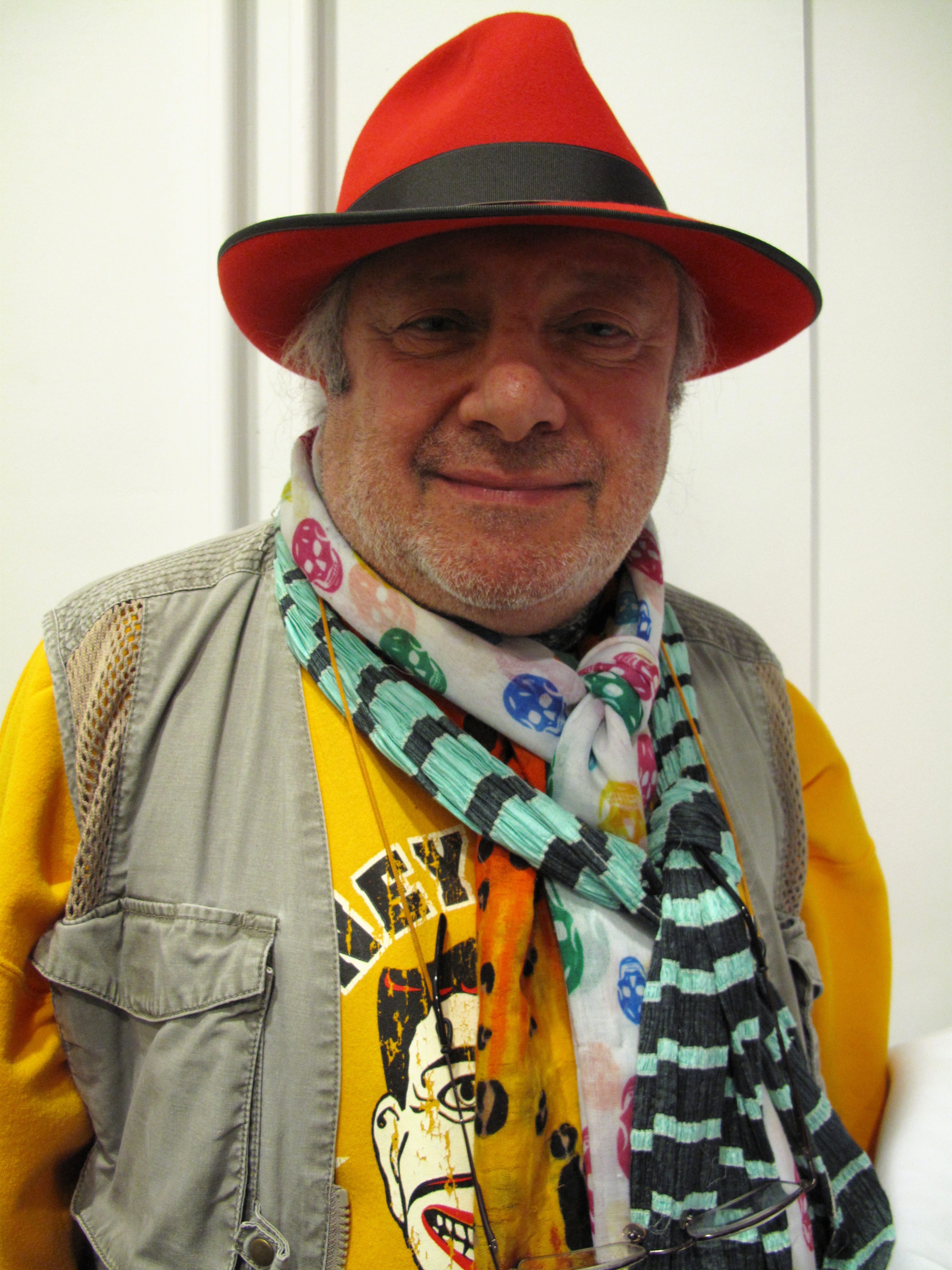
Charlemagne Palestine is someone who should need no introduction (at least to the readers of this Substack) but I’ll give it my best shot. Beginning as the enfant terrible of ‘60s downtown New York, Palestine had a front-door seat to the blossoming of the American avant-garde. A self-described quasimodo, his music is inseparable from his personal eccentricities. His short height and bounty of colorful scarves and hats make him an instantly recognizable figure, and for every single performance he gives, he’s surrounded by an armada of stuffed animals. I got to witness one of these performances for the first time at Big Ears earlier this year, and even having been a fan of his work for several years, I was not prepared for just how striking his menagerie of stuffed animals would look spread across the chapel he performed in, or for the ever-shifting physicality of his sound. We were unable to meet in-person due to some travel difficulties, but he was gracious enough to speak to me for 90 minutes on Zoom. The man’s got stories for days - growing up around the Jewish mob in Brooklyn, getting turned on to Johnny Walker by Stravinsky, and getting a pivotal job playing carillon at a church next to the MoMA all because his girlfriend was afraid he’d go to jail for selling pot are just a few. But the conversation always circled back to his full-throated embrace of the moment, and the creativity pulsing through his every move.
Thanks to The Wire for making it possible for me to attend Big Ears and to Amelia for helping with transcription.
Thank you so much for taking time to talk to me. How are you doing today?
I’m ok. It’s a Sunday in Brussels [chuckles]. And you’re in Chicago?
I am in Chicago, yeah.
That’s where you live?
Yes. Have you ever spent any time in Chicago?
I actually did some projects in Chicago, starting with the New Music America in ‘79 with John Cage. And, then I was invited by the Chicago Art Institute. I did a week of performances and installation at that, uh, what is that place called, where they do a lot of new music and jazz? … Well, several times I’ve been in Chicago, I know Chicago, but we haven’t been there in a while. I was just there at the airport for a long time because my flight to Tennessee was canceled going through Washington D.C. and I had to go the next day and go through the Chicago airport. I never knew O’Hare airport very well, but now I know it better.
Well, that’s great. I’m actually from Washington D.C. originally, so you’ve been touching on all the places that I’ve lived over the years on your way to Tennessee. Have you had many opportunities to play in the states recently?
I had a big installation at 356 in Los Angeles some years ago and I was at that place in San Francisco, what was it called? Where Dena Beard was? I think it’s called The Lab.
I think I’m familiar, yeah.
And then I was at the Maybeck House over the years and did the Monday Evening Concerts in Los Angeles. Recently I was at The Pompidou Miami doing installations and performances. And then in New York, in and out a bit, I was at a gala by Lawrence [Kumpf] at Blank Forms.
So I’ve been in and out. I mean, I’m from Brooklyn, but it’s become so much more difficult to afford. I mean, you could have an entire studio for like $500 and now you need $50,000. It’s another scene. We used to have our favorite hotels and they were like $200 or $150, and now they’re $500. I mean, it’s a reality in our world. But I’m happy in Europe [laughs], I’ve been here over 25 years and I’m super happy that we can go from place to place rather easily and things like hotels are much cheaper and more comfortable and things like that.
I remember I was watching the documentary about Tony Conrad and he had a story about how one of his places in New York, I think in Manhattan, the rent was $50 a month and the landlord would collect rent with a gun.
They were real stories. I mean, the Gramercy Park Hotel was our favorite hotel, the one that’s right at the very beginning of Fifth Avenue where there’s a little park. Not even such a long time ago, we had the best room for like $180 that looked onto the park, and then a friend of Julian Schnabel bought it and the same room was $1,300. If we wanted to, my wife and I could go there, we have a little cash, but why? There’s so many really nice cities and towns in Europe. Jay Sanders, he likes to try to get me to New York. Lawrence, he sort of overbooked before he opened Blank Forms, he was much more involved with my coming to America, but since [starting] Blank Forms he has so many people he has to be responsible for, so we do that less often. Also that place in Brooklyn that Conrad helped start…
Issue Project Room?
Yeah, there. So anyway, Brussels is fine. I was just in Amsterdam yesterday, there’s a festival that goes on every year that has a name that I hate [laughs] - The Minimal Music Festival. But each time I go there, I do something the most outrageously maximal - slightly revenge and slightly because I just find that term - any term - to be a pain in the ass. Too bad we didn’t get to meet in Tennessee, but I actually arrived a day late because my flight was canceled for an entire 24 hours.
Yeah, Regina [from Front Porch Productions] told me about that. I’m happy to be talking now and I’m happy I got to see you perform and everything. I saw your organ performance. I didn’t get the chance to see the second one.
The second one was great.
I can imagine.
I had a delicious Yamaha instrument. Yamaha bought Bösendorfer, which was the company, that’s the piano that I’ve been playing since the late ‘60s. They bought it and now their pianos sometimes have the presence of a Bösendorfer. Much more than a Steinway or things like that. And now Charles Amirkhanian and the people from Piano Spheres have invited me to come in October for the 30th anniversary of Other Minds. So I’m already booked there for October, blipping and blopping between San Francisco and Los Angeles like I used to when I was a student.
That sounds great. I was going to say, the organ performance was probably the highlight of the whole thing, I really loved it.
Oh, I’m glad. I had 15 minutes of rehearsal [laughs]. I was supposed to have a rehearsal the day that I was on the plane the second time. Regina had set it up that I’d have a few hours, but that was because I lost the first day. The day I was on the plane, the second day, was the day that she had gotten me a long rest. But I’m famous for that. I mean, some of my best performances have always been almost without any preparation. I work really well when I’m in the Now, because I hate certain words, I hate “minimal”, I hate “improvisation”, there are certain words that I just find overused and don’t really apply to my way of being. And I was able to be in the Now in that church, with those two instruments, and they just clicked. But of course in those kinds of things you also have to have a technical crew that just sort of gets it. And I must say that now that I’m as old as I am, even the younger technicians, they already have been listening to music and points of view like that for years and years so their ears are - I mean, once upon a time, nobody knew what the fuck it was all about, what we were doing, but now everybody has been influenced and been doing it, and they know how. And now I’m electrified. Back in the old days, I was acoustic, and now acoustic really doesn’t work. I want [the audience] to be immersed. I think I even told the sound guy for the organ, ‘Give me an IMAX sound’ and immediately he knew exactly what I meant. So it worked, and I’m glad that you liked it.
It sounded great. With a music festival, because of all the turnover and different moving parts, there’s often a few sets, even from really great musicians, where the sound is a bit off, so I’m glad it worked out. Late in the performance, you had the organ on sustain and got up and played the piano at the same time. Having listened to a lot of your recordings, I was wondering, is that a thing you do frequently? I feel like it’s usually either the piano or the organ, but not both.
No, lately it’s whatever’s in the room. There’s a place in Amsterdam called Orgel Park and they have five organs. It’s in a big church that’s become now an organ central, like a contemporary development for organ technology. And so they said, ‘We have five organs, which ones do you want to play?’ I said, “All of them” and so that’s how I do it now; whatever’s in it, I say “All”, and that makes it much more interesting, cause I certainly didn’t come out of the traditional school of piano playing. Well, I played bells. The first thing I played was singing.
What are you drinking? Is it coffee? Is it gin?
It’s green tea.
Ah, green tea. It’s early.
Yes, it’s earlier in the day here in Chicago.
Oh yeah, that’s right - you’re seven hours, right?
Yeah, so it’s like 10:45 in the morning.
Ah, you’re still in breakfast time and I have my Johnny Walker, it’s whiskey time for me [laughs].
Has the whiskey always been -
Actually, Cognac used to be my most famous, but I always had alcohol as one of my inspirers, I must say. I used it often as a time transformer or an energy transformer. But when I was younger, it was Cognac because Cognac can be like speed - really - and I used to do pieces that were hours long back in the old days. Now everything is more intense and at my age now I drink the whiskey that, actually, Stravinsky turned me on to. I met him when I was a teenager. My family, we always drank Chivas Regal, cause on my father’s side they worked for the Jewish mafia in Brooklyn and they were all Chivas drinkers. And then I met Stravinsky near Times Square where they had a big recording studio for Columbia Records. And he was doing another Complete Stravinsky Conducted by Stravinsky and when I met him he was drinking Johnny Walker and since then it’s become my favorite drink.
It’s interesting because I don’t know of many musicians who would speak of alcohol as a source of inspiration. It’s usually just something that comes with the territory.
Well, see, “alcoholic” has a very bad connotation. No, no, it’s my elixir.
You mentioned your dad worked for the Jewish mob?
Yeah, cause that was the neighborhood that I was brought up in, in Brooklyn. It was Brownsville, which was a famous neighborhood from people who emigrated from Eastern Europe in the early part of the 20th century. A lot of Jews wound up in that part, which still has remained, strange enough, modestly non-chic. Still, I mean, everything’s expensive, but it’s more a people’s neighborhood. In my day there were more gangster Jews, now there are more people of color, but it still remains a rather… difficult place. I’m happy when I visit, I often go there, because it has the feeling of the old times. It doesn’t have a business hotel smell or look, it looks like a real neighborhood.
So where were you actually brought up?
Washington, D.C.
Ah, Washington. I have a whole bunch of my family there because the only other artist in the family was my mother’s brother - they’re all gone now. He was the art director of the Pentagon.
Really?
Yeah! [laughs] They called it Art and Heraldry because heraldry is like medals, medallions and all that stuff. And so I had a whole slew that still lived between Arlington, Virginia and Washington D.C. because he worked there after the Second World War. He married a woman who was very important, her father was very important with that fabulous Masonic church in Virginia, that kind of Egyptian church [Editor’s note: I think he’s referring to The George Washington Masonic National Memorial in Alexnandria]. It was also an interfaith marriage, because we’re Jewish and she was a daughter of a Baptist. So it was an interesting time, we had several interfaith marriages when that first started to happen.
I’m from Washington, DC and I’ve lived in Chicago for close to four years now -
Ah, ah, ah, you’re a new-y!
[laughs] Yes, a little bit. I love Chicago though, I don’t really have any intention of living anywhere else. But I’m actually a sixth generation Washingtonian, I’m also the descendant of Jewish immigrants from Eastern Europe. But what does being the art director of the Pentagon even mean? Do they have art there?
They made flags and medallions and anything that was for the White House and for all official buildings, American buildings all over the world. It all went through the art director and that was my uncle Irving. Actually his real name was Lipschitz, but back in the Second World War my grandfather, my Lipschitz grandfather, had three sons going to the Second World War in the Pacific after Pearl Harbor and there was already antisemitism, even in the South, going through basic training as a soldier. So he decided to change the whole family’s name from Lipschitz to Lyons, L-Y-O-N-S. Even my uncle, who was the art director of the Pentagon, he was known as Irving Lyons, but his real name was Irving Lipschitz.
Was that the only time you’ve ever heard me live?
Yes. I’ve listened to a lot of your recordings so I figured I had a sense of what I was getting into, but it still wouldn’t have prepared me for the effect of seeing it live, how loud it was. In the best way.
I’m a very visceral, physical person. And so I wasn’t really - I mean, it’s not that I wasn’t made for this because a lot of my discs now are like part of my history. That’s the way it was. But of course I was always better live. That’s also why I didn’t have other people, the kind of people who come at a certain hour and they sit on a certain seat with a music stand and they open something and then they look at what that is, even if it’s just one sound for an hour. There’s something very official about it. I like to live in the Now and who knew what the room would be, who knew what the feeling would be, what time it would be, what the energy would be, what the weather would be, whatever would be. That was my specialty, and that is impossible to imitate and change if you make a recording. Most of my recordings were made under that kind of atmosphere. And then they became “the” version.
But I always liked it how you discovered me, just there. Even with 10 minutes of - I wouldn’t even call it rehearsal, I just had time to prepare, and then the instrument and I danced or fucked or whatever, without any knowledge of would happen from the moment I did it to the next moment. And it went incredibly well. I was also tired from my long trip and now I’m no longer in my thirties, forties, fifties, or sixties. I’m in my late seventies, but still, that way of being in the Now is how I actually prefer to work on it. And it worked for those two performances. The other one, which you didn’t see, also went super well. It was in this room, you were probably in it too, all windows everywhere and big screens. And I had some of my color video works from the ‘70s that I played with and that went super well with this Yamaha that I was explaining earlier, blah blah blah.
Are you the kind of person who’s very specific about the space you want to play and the specific instrument you want to work with?
I mean, Vladimir Horowitz used to travel with his own pianos everywhere. I have 10 pianos here in Brussels. I don’t know any important festival where I’d be invited where I could send one of these pianos, for example. And then I have a carillon, I have my own bell system here and then I have organs. So to answer that question, it was an impossibility, which became my approach. Organs, for example, are never the same. They’re always different based on the company who made them and the space that it’s in. How big is it? From what period? Angelica, which is a festival in Bologna, Italy, they got me an organ in Bologna from 1515, and it’s non-temperato. It was a magnificent instrument and we have it, it’s on record, but I mean, who’s played an organ that’s more than 500, 600 years old? Me! [Laughs] I invent work for each organ. I don’t have a work in mind. I mean, if you tell me now, “I would really love for you to do a work for a specific instrument, what would you play?” I’d say “well, what do you have?” That’s my approach, since my whole - I wouldn’t even call it a career, but it is in a way. That’s how I work. I work best when I don’t know which, when, where, how, instrument. So I certainly have seen and been with favorite instruments, but I don’t always get them. Especially in the old days, because people found my approach and the way I dress and the way I decorate - I hate spaces that aren’t magically decorated. Often churches and places don’t want to invite me a second time, even more now because there are now churches that have like 50 people come on Sundays for their services, but when people like us play there, it’s filled up to like 500 people. So they’re jealous and they say, ‘Well, how can we get 500 people there?’
Electronics were easier at first. That was also the time of the Columbia-Princeton Electronic Music Center and they were all very uptight. I have always been kind of allergic to academia. Not for just a visit, I’m great at academia for three or four days. Students that - I don’t even love the word students, I call them my tribe - my tribe and I, we work [together] for three or four days and it works very well, but then the professors and the others get angry because I break down all these bricks of rigidity that always got in the way of my work. My works are very fluid, not only in their actual sonority, but in my approach socially. I like when things just sort of happen. I mean, Tennessee was a perfect example in a way [laughs]. When Regina said that you had really enjoyed my performance, it made me laugh. I told my wife because it all happened at the last minute, but she’s been traveling with me for the last 25 plus years. She’s Belgian, she’s here. She’s not a musician. She’s from a famous art family, but not herself. She laughed because of course she said, ‘Yeah, they always like it when you just sort of do it!’ [Laughs] and those are my scores, I do it. But the disadvantage - I was a very good friend over the years of Eliane Radigue, her early works were done by her alone and then she had other people to do them. So it means that when she died just some weeks ago, she has works since around the year 2000 that other people can play. And I have very few works. I had Rrose - I don’t know if you know Rrose, Seth Horowitz.
Oh yeah!
I’ve only had about five or six other musicians who play when I’m not playing with them. Like now I was just in Amsterdam with Oren Ambarchi and Daniel O’Sullivan. They did my early work for Indian organ and falsetto called Karenina. And we created a trio out of it, which is now electrified and different.
When did you first start working with electronic instruments?
I was 13, 14 years old in New York City and that was when Moog started to become Moog because he started to make theremins. You know what theremins are [Imitates the sound of a theremin]?
[laughs] Yes, I do.
He was a Russian - actually, the Russians allowed him to come to New York. He was actually a spy because he had such good technical qualities. He invented some of the original hidden microphones that they could listen in on; espionage. So he had the rights to live in New York City for example.
I started first with the voice as a little kid singing rock and roll, stuff from the ‘50s; The Platters, and Johnny Ray and people like that. And then I sang in Synagogue and then I got a job. There were four specialty schools in New York City if you don’t have any money, but you wanted to do cultural things, that our mayor started in the ‘30s. Fiorello La Guardia was a half Jewish, half Catholic immigrant from Italy who became the mayor of New York and he started schools especially for immigrant children to learn about science and culture, et cetera, and I went to those. I very quickly actually worked with a guy called Alwin Nikolais, who was a famous choreographer who made his own instruments, a little bit like Harry Partch and a few others. And I became their sort of mascot. I was a young kid and I loved all these weird machines they were doing. Len Lye was another one from New Zealand who was in New York a whole bunch. So I worked in electronics and then I got hooked up because of a guy called Ingram Marshall who had a big book that Peter Gordon came out with, who turned me on because I wasn’t permitted to go to Columbia, Princeton, but Mort Subotnick had an electronic music studio at New York University. I was already going from Brooklyn to Manhattan to the High School of Music and Art. In the beginning, I was most interested in indigenous music, non-Western music from all different cultures from all over Africa, Polynesia, Asia, India, that really excited me. And the new electronic experiments that all these people were doing. And they were searching for young musicians, composers, whatever, to jiggle jaggle with them, to give them advice. What should we do with all these machines? And I was of that generation, so I met Moog and I met Buchla and I met Arp, and then Serge Tcherepnin was working with Buchla and we created one of the earliest solid oscillators that didn’t drift. So I was also into it. I am a do-it-yourself imbecile. I don’t know how to do it, but I was in that period, and so I was in the beginnings of American electronic music with some of my early works. If you look back on Bandcamp you’ll find a lot of my early stuff that came out on an Italian label called Alga Marghen. And so I started in everything, and then I played bells because it was next to the Museum of Modern Art and I got a job [at a cathedral] there, playing my own crazy musics next to the Museum of Modern Art on 53rd street. So I mixed them all - mixed and matched, but it was mostly solo. I’ve mostly been a soloist except when from time to time, groups that had been maybe a little bit influenced by me met me and they said, wow, you know, we really like what you do, would you ever consider playing with us? My answer was always, okay, let’s try. I did that with a group called Perlonex. I did that with Pan Sonic, which was a group from Finland.
Did Pan Sonic come to you about collaborating?
Yeah, they came to me, Mika and Ilpo. Unfortunately, Mika is no longer with us. Yeah, that was very early when I was doing a lot of work in Amsterdam. I was already traveling a lot because there wasn’t a lot happening for contemporary - what did you call it? - experimental music in New York City. I already started to become quite more appreciated in Europe more than in A-me-ri-ca. [spoken like Rita Moreno in West Side Story]
Your early electronic work is really interesting to me because I associate that time with the music coming out of these institutional spaces, like the GRM in Europe or the Princeton Tape Center, places like that, but your music doesn’t sound anything like that world.
Well, like I say, I was a soloist and I lived in my own Now. It’s really interesting, cause I just saw a whole film about the surrealists and the impressionists on TV. We have a program here that’s like your NPR that Trump is trying to destroy, but we still have it. It’s called ARTE, A-R-T-E. It’s all about why in Europe there were all these groups of artists that took the same name and became like a club. There’s a supposed joke that they said was Woody Allen, but it was actually Groucho Marx, who said, ‘I would never want to be a member of a group that would have somebody like me as a member.’ And I always felt the same way. And just this morning when I saw this program about these -isms, they all felt very lonely and terribly poor. In Paris, for example, places like that, there were really nice cafes where all these people got together. So they felt less lonely if they all worked together as a group, which is logical. But I actually heard it this morning and I think it’s really funny, cause they tried to make me a minimalist. That’s why I immediately started to sabotage that term, cause I thought it was such an unsexy term. And now everybody, like just now at the Minimalist Festival in Amsterdam, I just saw Terry Riley and he said, “I never was a minimalist”, and Phil Glass, who I used to share a studio with several years ago. I hate that word, but I was the first to resist such a horrible name. I just found it so… I mean, even if we just use a few things and we do an enormous amount of things with just a few elements, the word minimalist is just so unsexy. I always hated that term.
I totally understand that.
But now all my colleagues have followed me and they too said, ‘I never liked that word’, but at the time that was how you made your living. And there’s even this festival, which is a very well-known festival in Amsterdam every year, and they still call it the Minimal Music Festival. And what I heard already when I was there, it was an experimental, more the word you just said, an experimental sound experience festival and not at all the minimal music, but minimal became the word of the century.
When you were first doing this kind of music in the ‘60s and ‘70s, was anyone using terms like “minimal” or “minimalist” or “experimental” to describe it?
Well, we’re using it for visual art or conceptual art. We used to call it trance music, for example, because it’s in time. I mean, trance, if you listen to just one fucking tone, like La Monte [Young], you don’t think “minimal”, you get stoned! If you’ve had a little bit of weed or a little bit of LSD back then, you fell into a trance. You weren’t in a minimal. Minimal was something very… it’s very…
It’s academic.
Exactly! [laughs] So we in the sound world didn’t use that term, but Tom Johnson, an old friend - he’s also gone now, since about 15 months ago. He was living in Paris. He also left America and married Esther Ferrer, the conceptual performance artist from Spain. He wrote an article for The Village Voice around 1974 - not only an article, a whole series. He made “minimal” into a term also for performance, but it didn’t ever start as performance. It started with Frank Stella and Carl Andre, like works that were very stark. It was for a work, not for time passing. Tom Johnson decided you could use the term because we were also doing things that didn’t have a lot happening, in a certain way, when time was passing. He transposed that word into a performance word or a sound word and he liked that word, even I think until his death [laughs]. But it wasn’t ours, or certainly it wasn’t mine. Now all my colleagues, they’re all saying it wasn’t our idea either, but it became the way to get things happening. It became important with that whole group. I never liked it, and now they never liked it. So it’s all fine. But there’s still a festival, I just came back from it. And the work I did was very lyrical and Baroque and experimental, but they still call it The Minimal Music Festival because that’s how they get their funding.
Yeah, it’s marketing. If you can’t describe music in a very short, pithy way, you can’t really sell it.
I started to use the word “maximal” because I said, well, it’s the same thing. I mean, I take a few elements and I try to do the most with it. So it’s not a question. Minimal doesn’t imply how many elements you’re going to use, just that you’re going to try to ooze the most out of it. I preferred maximal, to me it was a lot more juicy than minimal. And so I started already about 25 years ago. If you look back on Google and things, when I started to rebel, often you’ll see, well, ‘Charlemagne Palestine, he was a performer and a sound artist and did installations, and it’s minimal, but he claims it’s maximal…’ now anybody can do everything on your laptop and it can be whatever you want it to be and, that exactly was my approach. Even back 50 years ago, I thought I’d just do whatever I want. I didn’t like the idea of being a club, like Surrealism and Impressionism and Actionism and Vitalism. I was an anti-ism kind of person, but it was really interesting this morning when I found that they were all very lonely and poor and often if they created a whole group together, they had much more political power in the system if they became a group. I always did my best to be allergic to that.
Going back to your early experience playing bells in the church, obviously you were experimenting with a lot of different things and doing your own thing with it. Was that something that kind of developed as you were working that job?
I used to sell marijuana outside of my high school, The High School of Music and Art. I didn’t even like or actually smoke marijuana. I was always into alcohol, though I call it elixir. I needed money and I was a young kid, and I got to know a guy who was a supplier and he saw that I looked so naive and cute that nobody would imagine that I’m a dealer. So outside of my school, I was selling all these things and my girlfriend at the time got really scared that if ever the police came, I could be put in prison for that. So she asked her father, “I’m really worried. I really love my boyfriend, but we need to get him another kind of job because he’s selling these things outside on the street. He doesn’t even use them, but he sells them to make money.” It happened that her father knew this guy who played bells next to the Museum of Modern Art, and he was retiring and he was looking for somebody crazy. No, actually not at all. He was looking for somebody churchy to take over his job. So my girlfriend said to her father, “You know, Charlemagne, he’s not very churchy. He’s even Jewish.” And they said “Well, let’s try, because my friend who’s churchy is also very weird, they might like each other.” And we met and we liked each other and he helped me to become a bell ringer next. The bells were amazing instruments because I was listening to the records from different tribal musics, world musics, I was listening to Bali, Java, Japan, Korea, different places. So I liked bells already. These were bells made in England. And so I started to play them and create. I had to play several hymns every day, but then I started to make my own crazy music.
And it was next to The Museum of Modern Art, where there was all the most advanced art of the time. So it all worked, but it all happened because they were trying to get me out of selling marijuana and LSD outside my school so I wouldn’t get put into prison. That’s what inspired me. So you never know what will happen. Again, that’s a Now, it wasn’t planned. It was a Now, and that’s what I still say now. ‘Well, what’s your approach?’ they asked me. My approach is with many N’s, many O’s and many W’s: NOW. That’s my most favorite term of how I dealt with even now, 60 plus years that I’ve been Now-ing, Now is still my favorite approach.
Wow, that’s amazing. That certainly did the job. I only have a few more questions, I wanted to ask about the God Bear Archives that you’ve been releasing over the past few years.
That’s with Cedric D’hondt (who runs the label Matière Mémoire). Unfortunately he’s gone on to other things - his wife is ill and of course, one of the problems with experimental music situations is that they don’t always make an enormous amount of money. I don’t know how Zorn has been able to do Tzadik all these years. He and I actually, we’ve never had a serious conversation ever in our lives, even though we’re both New Yorker Jews. We don’t have a chemistry together, but he’s a lot more ambitious than I am and he really wanted to be the King of the New York Jewish something-or-other, and I’m happy with Europe to be honest. I mean, even though I’m born in Brooklyn and I’m older than him, he can have the whole Tzadik-schmadik. I have no problem with it, but it’s true, we’ve never had even a simple conversation together. But I did work for several years with one of the artists that he liked very much, who was called Z’EV. Unfortunately Z’EV also is on the other side.
Z’EV and I also did a couple of discs together here in Belgium. Z’EV for a while was living in London and when he would pass through Belgium, he stayed with us and he was a very good friend. Unfortunately he passed a bit prematurely. I even have some of his sculptures. He also made instruments and he left them in my Charleworld. I have an enormous studio, I don’t know if you’ve ever seen it on the internet. But if you’re passing through, come and experience it, blah, blah, blah.
I’ve always wanted to see Belgium.
The advantage of Belgium is that in 10 minutes you’re in Holland and in 10 minutes you’re in France and in 20 minutes you’re in Germany and in an hour you’re in the UK. So the advantage of Belgium, it’s like a round point; central. It’s a little place and it’s also the home of NATO and the community of Europe. It’s the Washington D.C. of Europe.
Was releasing that music from your archives something that you had been trying to do previously? How did that project come together?
They all come to me. I mean, Zorn is a getter and I’m a receiver. I always waited for people. That’s how all those things happen, because the people who came to me and asked me, ‘Would you be interested in it?’ Okay. I’m perfectly happy now at my age and everything - how I started, where I went, where I’ve been, where I am now. I mean, I had periods, like everybody does, of doubt and anger because of certain things I even maybe helped invent, and then I felt they were taken from me, but now I’m glad whoever wanted it can have it. I’m fine with what I did and what I do. And that’s a big change that has come with my age. I mean, with a laptop everybody can do anything. So it changes what it was, who invented what and what happened, blah, blah, blah. Happily, with my family situation, I’m financially secure until I go on the other side. I hope on the other side all my friends became rich afterwards in, in paradise or in hell. And so we’re okay [laughs].
That’s beautiful. One thing I wanted to ask about was you had an album come out earlier this year on Staalplaat called The Organ is the worlds Greatest Syntesizer.
Oh, that happened exactly in that way! It was in Amsterdam. Oh, I love that performance! You had to play at eight o’clock in the morning. It’s a festival that has existed for 10 years. I was there for the 10th anniversary. It’s in a church, the oldest church in Amsterdam, that now is an art center. They asked me if I would do a performance. I said ‘what day, what time,’ they said Thursday at eight o’clock. In the morning. And so I said, are you crazy? I mean, when I started as a performer 60 years ago, if you had eight o’clock, you had like 12 people. So I arrived and I had a little time on a wonderful organ, and then the hour arrives and there was 350 people at eight o’clock in the morning! [laughs] I said, I can’t believe it! And then a guy who I’ve already done several recordings with called Radboud Mens, he happened to come. He’s a great recording engineer and he had brought one of his like little zoom machines. I think I’d hardly even woken up yet, but I did it. I don’t always listen to everything I’ve done, but I listened to that even recently. And Staalplaat made a really nice, crazy, sewn-on cover. And then I happened to put in their golden book at the end of my performance “the organ is the greatest synthesizer” - I spelled it without the H - “in the world,” which is what I actually do believe. Especially old ones, you can do microtonal sounds on them. The new ones, it has a sound, you can turn it on, you can turn it off, you can make it sound like a bassoon or a flute, but it doesn’t change pitch. But the ones that are hundreds and hundreds of years old, you’ll pull them out and it changes the speed of the air going through the pipe, so it becomes a microtonal instrument, and that was one of those instruments. I mean, I would need an enormous synthesizer system to do what I was able to do at eight o’clock in the morning. So what was your question about The Organ is the worlds Greatest Syntesizer without an H?
You actually kind of answered my question, because I was just going to ask what the word synthesizer means to you.
It’s a machine that can make sounds like you’ve never heard before. The problem with synthesizers in a studio or in an academic situation, you’re in a horrible room, like a soundproof room or a dead room or a classroom, but organs are built for their space, and the space and the instrument create a marriage together. And that organ, which was done for that piece, is one of the most beautiful. I never imagined such a marriage between architecture, people, and everything. It turned out even eight o’clock in the morning was perfect - maybe I was even in a kind of dream state, because the work is like a dream work. I woke up at six o’clock in the morning to get to the church to do it and it was full of people and we were all doing some kind of meditation at eight o’clock in the morning. I found that a delicious experience.
That’s amazing. There’s one album of yours I wanted to ask about, because it’s one of my favorites, that came out in the nineties. I think it was called Jamaica Heinekens in Brooklyn.
Oh, “Jamaica Heineken” - that was also done in Holland. I had a commission from the national public radio of Holland back then. That was when, in Brooklyn, every Labor Day Sunday in Eastern Parkway of Brooklyn, near Prospect Park and the biggest Brooklyn public library and the botanical gardens - I don’t know if you know, but Brooklyn is one of the biggest communities of Jamaicans outside of Jamaica in America. So that’s a holiday day, a Sunday where they do a kind of a carnival. Around 1990 with my little Sony recorder, I went all around, and I happened to do one hour just by myself in this entire carnival place where there were more than a million and a half people of color. And there’s the sound first of helicopters and then floats with people. It’s like in the Mardi Gras here in Europe, especially in Belgium, we have carnival every year. There’s a special time of the year where people are even out like you have in New Orleans. Even children don’t have to go to school for a whole week and they can go all over Belgium and they have these sorts of fiestas, with everybody dressed up in strange costumes and things, that have been existing for centuries. It’s normally around the 5th of September, it’s a Sunday in Brooklyn and Grand Army Plaza. And I happened to bring my machine and it created this amazing work that then afterwards, maybe it was Radboud also, who later just helped me to clean it up a little bit. At one point I happened to pass a guy selling cans of beer on the street and it happened to be Heineken beer, so that’s even in the middle of it. It’s “Heineken beer” with a very thick Jamaican accent and Heineken and the Dutch radio had sponsored it. And it’s one of my favorite works actually. It lasts about one hour and five minutes. We tried to do it again about 15 years later and then they had problems. They wouldn’t allow it anymore. You can’t drink. And then they had helicopters because it’s near the Chabad Jewish Center in Brooklyn - it’s right on the same street of Eastern Parkway as The Brooklyn Museum. And so it became a much more uptight and surveilled festival by the police and by the National Guard. But the year I did it, it was still free and open, which was about 30 years ago. And that’s why I call it Jamaica Heineken’s in Brooklyn. So there you go. It was the Now of that particular year.
Have you done any other pieces that incorporating field recordings like that, or was that just a one-off?
Yeah, when it’s happened, but that was magical. See, exactly what you just said is exactly not how it happened. It just happened, I didn’t decide. I have done other pieces that include blah blah blah, but none as perfect as Jamaica Heineken, which happened because it wasn’t supposed to happen. It just sort of happened. Those are my best pieces. If I’m a human instrument, all that I just do in the Now, that’s my best way of making my best pieces.
I only have one more question.
Oh, you still have another one!
I was just curious because I read somewhere that when you were really young, you had a gig playing congas with Tiny Tim. How did you meet him?
I played congas and bongos with Tiny Tim. You know the music of Tiny Tim?
I love the music of Tiny Tim.
Oh yes! [laughs] In New York City, a little in the West Village, MacDougal and Bleecker Street, where there was once a famous jazz club - it was also very close to the electronic music studio where I worked with Eliane Radigue, Serge Tcherepnin, Morton Subotnick, Maryanne Amacher, Rhys Chatham, we were all there. But there was a place called The Big Fat Black Pussycat. It was a club for drinking espressos and things and in the evening a stage opened up, and people from the neighborhood who were musicians would come and play, and often poets like Allen Ginsberg. It was just around the corner from The Village Gate. And I used to hang out there as a little kid, even dressed up like a beatnik with a beret - I mean, I was really cute. First I had bongo drums and then I had conga drums. And then I met this guy who talked in falsetto, cause I also did some pieces in falsetto afterwards. He introduced himself and he said [imitating his voice] “Would you try to play the drums with me when I’m singing and talking?” And I said, sure. And that was Tiny Tim, that’s how we started to work together at The Big Fat Black Pussycat Cafe on MacDougal and Bleecker Street. Unfortunately we never recorded cause in those days he was considered a weirdo. I mean, he was always considered a weirdo, but then he became more and more important. He even got on the Johnny Carson show and then he became kind of like a curiosity television personality. But when I knew him, he was still just a guy in that neighborhood who used to love to sing “Tiptoe Thru’ The Tulips”. And he asked me if I’d play in those. By that time, I think I was no longer with the bongos, I was with the congas that I played very badly. I mean, “Tiptoe Thru’ The Tulips” has no rhythm! It’s more a lyrical song than a rhythmic one, but he was so happy that I was there dressed up like a young beatnik with a big drum. And he liked, he liked to be, present himself. And that’s how I knew Tim.
Yeah. I had no idea he talked the same way that he sang.
He talked more or less the same way.
That’s amazing. Well, on that note, thank you so much.
I think we’ve arrived! It’s been exactly an hour and a half, as you imagined.