An Interview with Bill Orcutt

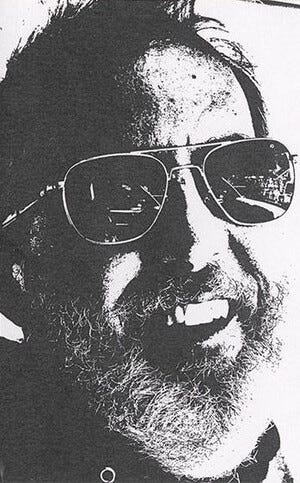
Over the course of his 40+ year career, Bill Orcutt has emerged as a somewhat unlikely and unassuming standard-bearer for fucked up guitar music. After starting out in Miami-based punk and noise rock bands like Trash Monkeys and Watt, he formed the band Harry Pussy, who created a snarling clusterfuck of sound that essentially swallowed up noise rock, punk and no wave and spit out something unrecognizably Dadaist in scope. After the band broke up, Orcutt left music for more than a decade before returning with a series of solo guitar records that merged the sweaty angularity he brought to Harry Pussy with a subtle sense of introspection. He also delved into computer music, creating an open-source sound manipulation software called Cracked and recording a series of albums reducing familiar sounds and numbers into their most maddeningly repetitive primordial state. In 2022 he released Music for Four Guitars, a collection of multi-tracked pieces that represented a breakthrough for his brand of stilted minimalism, and shortly afterwards he formed a supergroup of fellow guitar deconstructionists (including Shane Parish, Ava Mendoza, and former interview victim Wendy Eisenberg) to play the music live. His music is experimental in the most literal sense, always trying new things and getting as much latitude (if not more) out of failure as success.
This year has been a whirlwind for Orcutt. Just yesterday he released a new album with another former interview victim Mabe Fratti, following his solo album Music in Continuous Motion from earlier in the year. When I spoke with him at Big Ears on March 29, he had just finished up a massive three-night series at Roulette spanning almost every facet of his work. We talked about origins of the name Harry Pussy, discovering guitar players on Instagram, and much more.
Special thanks to Amelia for helping transcribe and to The Wire for making it possible for me to attend Big Ears.
I know you recently had this big thing at Roulette, how did that go?
It went really well. I’m always catastrophizing and imagining the worst possible outcomes. It all worked out and all the things that had to happen to make it a success happened and everybody seemed to have a good time and I heard no complaints, so it was good.
Yeah, I can relate to that, I’m always freaking about things, but then sometimes when things get bad, I just don’t really react to it because I already got it out of the way.
You already lived it.
I know you played The Four Louies…
We did, on Friday night. It was three nights: Friday, Saturday, Sunday we did the Guitar Quartet. It was basically everything that’s on the label that could be done. So the Guitar Quartet was the headliner on Friday, on Saturday was Four Louies, and on Sunday was the trio with Steve and Ethan - although that’s not on my label, it’s sort of an add-on.
Might as well. With the Four Louies thing, is that the first time you’ve done your computer music stuff live with a band?
Uhhhhm…….yes.
When you put that piece together, did you have an idea that it was something you would do live or did you think of it as just the same as the computer music?
When I was working on it, it didn’t occur to me that I would do it live, but it’s been one of my goals to try to do the computer music live, and then I thought, “oh, you could totally do this live.”
I’m sure you’ve played some of the other computer music stuff live, but just not with a band, just with a computer. Does it change the way you think about it at all, hearing it with a band?
No. I mean, that piece is a very fixed piece. It’s not done in Cracked, it’s not algorithmic. It wasn’t done with a controller or anything like some of the other records on that label. It was just done in Logic. It was just a copy and paste, built out of samples kind of thing.
So it was basically like a mash-up?
It’s a mash-up. It was just really done just because I recognized that, oh, these are in the same key, and they’re almost in the same tempo, and they’re using the same instruments, and they’re both very rhythmic and oh yeah, they really kind of belong together.
I know you just put out something new on Fake Estates where you’re doing the “Sweet Child O Mine” over and over again. Is that always how those things come about, where it’s just like one day you’re like, oh, this would be an interesting thing to do?
I mean, that one uses almost the same code as Mechanical Joey. It’s the same methodology. Just somebody said to me, made a joke about “Sweet Child O Mine”, and it just clicked in my head like, oh yeah, that’s so iconic, and the isolated guitar like that would be perfect to put in that context.
I feel like I read somewhere you said something about, I think you were talking about the kind of stuff you were doing on some of the solo records a while ago, where you were doing covers of “Star Spangled Banner” and “Moon River” and all these other songs that are so ubiquitous that they kind of don’t really exist as music, it’s just a part of the air we all breathe.
Yeah, yeah.
I mean, I think of “Sweet Child O Mine” and “Louie Louie” as long those lines.
They’re in that realm, yeah, I agree.
I’m guessing that’s something you’ve always been interested in?
I don’t like good taste [laughs]. I’m not a fan of… you know, matters of taste. I like just having raw materials to work with.
Definitely.
When I was approaching that songs project, I wasn’t thinking of what would be the most tasteful songs to choose. It was more like, what is the raw musical material in America that I can dig up and do what I want to do with it?
One thing I noticed just looking at the lineup for the musicians you had playing on the Four Louies live, that a lot of the people who were playing the organs were people who I wouldn’t primarily think of as organists.
I know [laughs]. I didn’t think of them as organists either. Mari [more eaze], I already knew her, but she was recommended to me as somebody that could do it. And so I asked Wendy [Eisenberg], I said, do you have any recommendations? And Wendy volunteered themselves as an organist [laughs], and I was like, all right. It’s funny because I had no evidence that Alan [Licht] could play keyboards at all, but I felt like I knew enough about him that he would be interested in it because of the minimalism angle. And the part that we assigned him was just, like, one key [laughs].
That’s what it’s all about.
So he did it. Yeah, it was great.
Anytime someone is drawing these kinds of connections between that kind of music and the minimalist canon, or whatever you want to call it, that’s something I’m really nerdy about. So I enjoy these projects a lot.
Cyrus [Pireh], I’m sorry to continue on with this list, but I had found out that Cyrus had an academic background. He had a degree in composition. I’m like, oh yeah, I’m sure he plays keyboards well enough to participate in this.
For sure. Cyrus is someone who’s on your label who I actually knew nothing about until that album came out, and that was truly an excellent album.
I met him 15 years ago or something. And in Minneapolis, we played a bill together and he was obviously a very weird guy, and then I started following him and realizing that he had all these interesting compositions. His previous record had one track on it that I just loved. And he was great to have at the festival because when he started playing, all the guitar players ran downstairs to the green room because there was a big 4K TV with a closeup on his hands, and nobody could understand what he was doing with his fingers [laughs]. And so all the guitar players ran down there and people were just, like, rapt watching him do his thing, because it’s so unlike anything else. So that was fantastic.
That reminds me of that scene at the end of A Mighty Wind where everyone comes out to watch Eugene Levy and Catherine O’Hara…
Oh, the kiss [laughs]. Yeah, that’s beautiful.
But with the record label, is your intention just to focus exclusively on guitar music?
Yeah. I feel like it’s easier to have a lane to work out of, cause there’s so, so much good music. There’s so much good guitar music. You can’t put it all out. So to kind of limit yourself and say, look, I’m just going to do guitar. I’m really interested in solo guitar, without drums and everything else. I’m also interested in anything that I do [laughs]. That’s another thing, but yeah, just to focus on guitar players is good.
It seems like when the label started, it was mostly just your stuff.
It was just me at the beginning.
When did you start thinking about expanding it and putting out other people’s stuff?
I put out Kris Gruda’s record in ‘23, I think. And I hadn’t even created [Palilalia] as a label. I don’t know if you know the backstory on how that happened.
Probably not, I know the album itself. I’m not sure about the backstory.
It’s all stuff from his Instagram page. And during COVID, during lockdown, on his lunch breaks from the kombucha factory, he would go on his Instagram page, and he would go out to his car with his little travel guitar and record to Instagram, like, little minute-long snippets. And it wasn’t just like a minute of noodling, each one was like its own little unique piece. He does a lot of jazz standards. So it would be a Coltrane, Ornette, or whatever, or it would be some kind of improvisation, but around a particular theme or something. And I was just blown away by how great these little posts were. So I said to [Chris] Corsano one day, when we were driving, I was like, “man, this guy’s a genius. I would put this out.” And then we were going to Big Ears and Chris Corsano saw Kris Gruda here. He’s like, “oh, Bill wants to put out your record.” So I was committed, even though at the time I had no real intention of doing it.
Did you not know him personally prior to that?
No.
That reminds me of this new album you have coming out with Mabe Fratti. I saw that she had said something nice about one of your albums on a list somewhere, and you just reached out to her about collaborating. Is that usually how you end up working with people? You just see their stuff out in the open and you’re like, why not?
I’m always looking for opportunities to do what I do in different contexts and to make new friends as it were. So, yeah, I liked what she did, I always liked her music, and so I was like, well, she would be somebody unexpected. I also like the idea of doing things that are unexpected.
It’s like Derek Bailey, how he was playing with DJs and people like that. Just the challenge of it.
Well, it’s an opportunity for growth. I like it.
You’re always trying something different, whether it’s the guitar quartet or the muzak thing you were doing on How To Rescue Things. Do these experiments ever make you rethink your process or whatever it is you’re doing on a larger scale?
I feel like it’s sequential. Like you do one thing and it opens one door and you can see other opportunities, other possibilities through that door, you know what I mean?
Yeah.
You can kind of jump from one to the other. You have to go step by step and discover, cause you can’t really - or I can’t - think that far ahead. So I’m thinking just one step ahead and then you’re like, “Oh, now that I’m here, I can get over to this spot.” So that’s how it usually works out.
So with the label you give yourself these specific parameters that you have to work through. I feel like that’s also the case with your music, where you have an idea, like “I’m going to do an album with strings or I’m going to do an album where I’m doing these covers” or whatever, and you find ways to work within the limitations that form presents.
Yeah, it starts with an idea and then figuring out how to implement it. It grows from an initial impulse or idea and then figuring out how to make that work and turn it into something.
So going back chronologically to Harry Pussy, I think of that music as being like a deconstruction of noise rock, or whatever you want to call it. When you guys were doing that at the time, was that how you understood yourselves?
It was interesting because the first single is very tentative, and it was, like, the first time Adris ever played drums, and it sounds very different from everything else. And then there’s this huge chunk of music that we did and it didn’t come out at the time. So we kind of jumped up straight to this other thing [laughs] There was a whole set that we worked up of these songs that were really short, very start-stop screams, they had all these dynamic changes and stuff. And that’s actually what we were deconstructing. So I felt like when we were done with it, it sounded great, but to me, it sounded kind of conventional. It sounded like music. And the other thing was that we had so much momentum. Not because we were being successful [laughs], but because in our own minds, we were going so fast that we just kind of blew through it. And then that was the material, the raw material that was getting deconstructed that wound up on the first album.
So was making it anti-music a motivating factor in that time period?
I guess in retrospect I definitely wanted to have chaos, but I wanted to be able to organize the chaos in a way that didn’t sound like it was organized, you know? And so a lot of effort went into that, and that was a very difficult thing to do.
One of the really memorable tracks you did with Harry Pussy was that cover of “Showroom Dummies”.
Yeah.
So in that context, you’re trying to obscure the lines of chaos and control, but you’re also doing a cover of a song that people are going to recognize and be able to hear what you’re doing differently with it. Does your approach change at all in that context?
I mean, a lot of it had to do with like, how do you get off stage? [laughs] So it’s all freeform, but you need some kind of definitive ‘shows over’ moment. And so we always had a couple songs like that, and that’s really the origin of “Showroom Dummies”. I also really liked that song.
It’s a great one.
And it was very unlikely for us to do, so that also was appealing. But yeah, part of it was just having something to play at the end.
I actually hadn’t realized until recently that you took time off from music for a pretty long time in between Harry Pussy splitting up and starting to put out your solo work. Were you still making music during that period or did you step away entirely?
I really wasn’t playing the guitar very much. I still had a guitar. I was doing a lot of tech stuff, so I was interested in that side of electronic music, the coding side. And I was playing around a lot with Max MSP and Pure Data and things like that. I mean, I was also really busy working full time. And so that was kind of scratching whatever musical itch I had, I think. But I wasn’t playing guitar very much.
What’s interesting is that your computer music doesn’t sound like what I think of when I think of computer music.
There’s no bleeps and bloops?
[laughs] Yeah, there’s no bleeps and bloops. But you mentioned being interested in that wave of computer music that was coming out on labels like Mego back in the 90s and 00s. Have you ever tried to make something like that?
I mean, it’s hard. The thing is, I always feel like I can’t win playing other people’s games [laughs]. I need to change the rules so that I can make something that doesn’t sound like other people’s music. And so much computer music is set up to make what’s on Mego or these other labels, so if you’re playing with those tools, it’s kind of hard not to go that path. So you have to make a concerted effort to like, not make that kind of music.
Just to put things in perspective, when did you first start becoming interested in computers and the internet and things like that?
So, I was running a not-for profit in Miami Beach. It was like a movie theater and it had a film co-op, and I remember the co-op got a very early Avid system for editing video. And this was ‘95 or something, maybe, which was a big deal. Computers weren’t cheap back then. Now you can edit on your phone. But in 1995, editing video on a computer was expensive. So it was a big deal, and that’s when I really started playing around a lot with the computer because I got access to one and could do whatever.
I read an interview once with Jim O’Rourke where he said something about, because he was always super interested in computers, he was one of the first people to get really excited about the internet and then also one of the first people to realize it was actually going to become something terrible. Is that something you can relate to at all?
[laughs] You know, the internet didn’t become terrible. I think apps destroyed the internet. Because the internet was kind of open, right? And then everything got centralized on these little things that are on your phone that are controlled by big corporations. But the internet itself was always sort of personal, it had a handcrafted quality to it that never really went away. People stopped making it because everything became focused on the app and Instagram and buying into other people’s big platforms. That’s the thing that destroyed the internet.
I love computer music, but I’m completely illiterate as to how computer software actually works. It seems like you came into computer music as more as someone who’s interested in music than as someone who’s interested in computers.
I just love the sounds. I mean, I started as a listener, and like you’re saying, it was like a complete black box. I would hear, like, an Autechre record and be like, what, how are they doing that? What are the sounds? Where are they coming from? [laughs] I had no inkling, you know? And so that, that alone is really enough to make you want to find out how it’s working.
I was wondering if you could explain the technology of how the Cracked system works to someone such as myself.
They’re all rather simple. They have sound sources like oscillators or sample players and then they have ways of filtering those sounds that are like low pass or high pass, manipulate an EQ on a stereo or something, and ways of wiring those things together and starting and stopping and mixing. There’s nothing about Cracked that’s unusual in that regard. It was just an API that I designed. I had an idea. I had done a lot of work with Macs and visual programming languages with those little boxes, where you’re literally drawing a string between two boxes to make the sound flow in a particular way. And I went as far in that direction as I could and then I decided I wanted to work in a text kind of situation where you’re just typing. And then I had other ideas for what kind of syntax that should have. So I basically designed the syntax and then wrote the program around that particular syntax. I don’t know if that helped or not.
It makes sense to me as much as anything in that realm can. For me personally, the fact that I don’t understand how it’s made sort of adds to the appeal. There’s a mystery to it. But when you started getting back into guitar music and stuff, did you feel like you had to relearn the guitar to a certain extent?
That’s a great question. It just happened, really. Somebody contacted me, they had found some old music of mine from the 90s and they wanted to put it out, and I had not even thought about anything. And it just opened the door for me. And then I was like, “oh, right, I was in a band once [laughs]. What was that like?” And stuff had shown up on MTV, on YouTube and stuff. And so I started watching some videos that I had never seen, just cracking up at how incredibly intense it was. I’m living in a house with three other people, so that’s not my electorate, but I got the acoustic out and set it up with four strings and just started playing again, and it just kind of all came back and it had changed. And playing the acoustic made it different. But it started with this sudden interest in playing guitar and what I had done in the past. And again, these things just give momentum and then you don’t even have to really do it yourself. It’s like a higher power is telling you, “pick up the guitar, play.” And so it just started happening and within a year I was ready to make a record.
Considering how much things had changed for you, when you were seeing those old Harry Pussy clips, did you have any fear of it being embarrassing?
No, I was laughing at how ridiculously over the top it was. It was a video of us at The Cooler, and Adris’ drumming was such a force, just like windmilling the drums. And for the first time, I think I was able to see it the way it must have appeared to people at the time. Because when we were doing it the first time, I was too close to it, you know? I had seen the evolution. But taking off 12 years and then seeing a video of it, it was incredible. So no, I wasn’t embarrassed at all. I loved it.
I mean, if I was in that band, I would not be embarrassed.
No, I was like, this is phenomenal. It was the laughter of recognition and suddenly realizing how incredible it was.
You recently put out Shane Parish’s Autechre Guitar record, which obviously relates to the computer music stuff we were talking about.
I mean, I was listening to that stuff in the 90s, when it was kind of first becoming a thing.
Were there any lessons or ideas that you got from that music that you were able to transfer to your own guitar playing?
Well, I’m always interested in loops. So with electronic music, what I’m thinking about is the use of loops, and how they can be manipulated, and overlaying loops. I do tend to sometimes think about structuring things in terms of the way you would structure it in a program or something, iterating over something and modifying it as you go.
Considering you and Shane are both interested in Autechre and also guitar music, do you get the sense that you both arrived at that place separately?
Shane and I?
Yeah.
No, we’re very different.
That’s the sense I get.
No, Shane is completely self taught, but he has a much more conventional sort of proper understanding of notation and key signatures and all the stuff that I know. He’s someone who makes very interesting and unconventional music, but clearly could make very conventional music if he wanted to. He teaches a lot. So he’s teaching students and then he also does - I don’t know if he does it anymore - but he would play like, supper clubs or whatever, playing music for people to eat dinner to.
I love that. I know that Wendy also teaches, does Ava [Mendoza] teach anything?
I don’t know if Ava has any students. It’s possible, she’s just never mentioned it.
It would be funny if all the people in the guitar quartet were also teachers. But going off that, when you were putting together the guitar quartet, did you have a specific idea of what you wanted from each individual member?
No, my God, it was all so magical [laughs]. I just had this idea. When I had Shane transcribe the record [Music for Four Guitars], I thought of it as a promotional device, because it wasn’t improvised music. And I thought, you know what, someone could actually transcribe this and it would make sense. I knew Shane online, we had met a couple of times, but I knew him primarily online as a guy who transcribed a lot of stuff, and I just asked him to do it. So getting the score was kind of its own thing. And then we discussed how it might come to be played live. And it was like, could it be done with a looper pedal or could it be done as a duo? And then it was really Ava who wrote to me and said, “hey, if you ever do play this live, I would love to be involved.” And that’s what made it all happen.
So she reached out to you?
She reached out to me.
I get the sense that a lot of people you collaborate with, usually you’re the one who reaches out to them.
Yeah, I don’t know. I mean, it just came out of the blue. I had met Ava - we played a Rhys Chatham piece together with Rhys in San Francisco - but she wasn’t somebody I knew real well. And so she wrote, and then when Ava got involved, Shane had played with Wendy, and he reached out to them, and that’s when it happened. There was never any case of being like, “is this the right fit?” [laughs] They were the only people who were ever considered.
So, considering your solo music is improvised, and you play a lot with other improvisers, have you ever thought of yourself as an improviser or do you think of yourself as someone who makes music that happens to be improvised?
I think the latter. I think the whole cult of improvisation and stuff is not that important to me. I often treat improvisation as raw material. I think it’s normal to edit an improvisation. I know a lot of people would never do that. But, to me, I’m thinking of it like it’s Cassavetes or something, where actors will improvise in front of the camera and then the editor and director make decisions about how to put the jigsaw together. So, I totally think of it that way.
Just thinking about these connections between film and music, I know that your album Odds Against Tomorrow, took its title from that Robert Wise film, which I love. Was there any connection between that film and the work you were doing on that album?
No [laughs]. I love the title.
I love it too.
It’s funny, because I found out recently that Kramer, I think, had already used that title somewhere on something. It was not a well-known release, but I think he stumbled onto that.
Are you the kind of person where your interest in film informs your approach to music?
Probably. I mean, it’s all together, it’s all of a piece. All the little interests and thoughts and things you read and things you see and things you hear. I’m looking for parallels. Something that I’ve done over here or something that I’ve learned about how something works, how can it be applied elsewhere?
I was going to ask about your album, Jump On It, because if I’m not mistaken, you were intentionally trying to make a pretty acoustic guitar album?
I wanted to make an acoustic guitar album. I mean, it is pretty. So, yeah, it’s different from, say, A History of Everyone or whatever…you know what, you’re right, I’m going to accept this interpretation. It was an attempt to make a pretty guitar album.
Are those sensibilities something you’ve gained more appreciation for over the years?
No, I’ve always liked that kind of music. I like Pat Metheny and things like that. I have a ton of ECM records.
Oh yeah, I’m an obsessive ECM fan.
Have you seen that movie about the making of that Keith Jarrett album, Köln 75?
I actually found out that movie existed, like, only a couple of days ago.
[laughs] Shane saw it on his flight from Atlanta to New York. I was so jealous. Like, on Delta. In-flight entertainment. I was like, goddamn, man.
Yeah, the last movie I watched on a plane was the Naked Gun remake.
[laughs]
But I guess there’s a stereotype of the angry, rebellious noise or punk musician or whatever who gets older and starts making prettier or more straightforward music. But the sense I get from having known musicians is that they’re always interested in different things. I guess maybe as they get older they have less to prove and just want to make the music they want to make.
I mean, the whole thing really kicked off from me wanting to play with Adris. And then… [laughs] we kind of randomly chose this name. I’ve often wondered about this, like, the choice of a name. How does it work to constrain the music that gets made? And I felt like, with us, there was only going to be a limited amount of things that we could do. They were going to be good things, but it wouldn’t encompass, like, acoustic music. It’s also interesting, I have two tunings, and with that band I only used standard tuning because the other tuning is too pretty and too consonant. And you just couldn’t use what I call the G tuning, because there wasn’t enough tension in the music.
Something I’ve noticed from talking to everyday people or whatever is that when you have a name that’s sort out there or provocative, like Harry Pussy, people are like “Oh God, I can’t believe someone would name a band that.” But I’m the kind of person where, it’s not that I don’t care, but I don’t usually react to band names.
Right.
Unless they’re really dumb and stupid. Honestly, I think the only time I have a negative reaction to a band name is if it’s a shitty pun.
It’s funny, I was thinking about it with The Roches, the decision to use their name just by itself like that. Like, how did that affect the music that they went on to make? I love The Roches, by the way.
Oh, yeah, who doesn’t? But anyways, given all the people you’ve worked with over the years, especially recently, I get the sense you still spend a lot of time listening to music.
Yeah, yeah.
How do you usually find new stuff?
I mean, I’m always looking. If I ever see, like, somebody playing a guitar on Instagram, I’ll listen. I’m always just curious about what people do on guitar. Anytime I see the name of a guitar player - like, if there’s a trio or something, and this is the guitar player - I’ll Google that to see, like, do they have a Bandcamp, and what does the music sound like, and stuff like that. So it’s never necessarily a lot of time spent checking it out. Usually I try to listen to enough things that I’m not just getting some weird release that they did, so I’ll try to get a sense of what kind of zone they’re in.
Yeah, and I do feel like it’s a case with a lot of musicians - including experimental musicians, or whatever - where they become more cynical and they isolate themselves as they get older or whatever, but you’ve done the opposite, which you’ve dedicated a lot of time to working with these young musicians, which I really admire. What’s the most important thing you’ve learned from those musicians?
Oh, wow. That’s a hard question.
Yeah, that might be a loaded question.
[laughs] No, I don’t even know.
Or maybe just anything you’ve learned from them?
It’s just nice to see what people do, and get excited by people with an interesting approach. It’s also interesting to see the people whose records you’re not going to put out. All the time people will send me things, and they’re not bad, they’re good. But I can’t put out every record, because I’m doing vinyl as well, it has to sell at a certain level, otherwise I’m going to lose money. Everything is self-funded, I don’t have any funding source for the label other than the records that we sell. So that also constrains it, because I have to feel some confidence that other people are going to like it the way that I like it.
Yeah.
But I enjoy hearing everybody, even the ones that I’m not going to put out.
Do you listen to everything that everyone sends to you?
No [laughs].
Yeah, that would be crazy.
But I try to listen to most, at least some of it, just to get a sense of what it is.